Überblick
KI-Datenmodellierung ist die Disziplin der Strukturierung, Beziehung und Vorbereitung von Unternehmensdaten, damit künstliche Intelligenz und maschinelle Lernsysteme sie zuverlässig in großem Maßstab nutzen können. Es erweitert die traditionelle Datenmodellierung – das konzeptionelle, logische und physikalische Design von Daten – um eine KI-spezifische Schicht: Features, Embeddings, Vektorstrukturen und die für die kontrollierte KI erforderliche Herkunft.
Da Unternehmen von KI-Experimenten zur Produktion wechseln, bestimmt die Qualität des zugrundeliegenden Datenmodells zunehmend, ob Modelle genau, erklärbar und vertrauenswürdig sind. Lesen Sie weiter für eine vollständige Definition der KI-Datenmodellierung, der vier Typen, die in KI-Workloads verwendet werden, der Prinzipien, die KI-taugliche Daten von allgemeinen Daten unterscheiden, einen Vergleich mit traditioneller Datenmodellierung und wie führende Unternehmen sie im großen Maßstab angehen.
Was ist KI-Datenmodellierung?
KI-Datenmodellierung ist der Prozess, Unternehmensdaten so zu strukturieren, dass künstliche Intelligenz und maschinelles Lernen sie mit Genauigkeit, Konsistenz und Rückverfolgbarkeit nutzen können. Sie umfasst das konzeptionelle, logische und physikalische Design von Daten – dieselben drei Schichten, die traditionelle Datenmodellierung untermauern – sowie eine zusätzliche Schicht, die den Features, Embeddings und Vektorstrukturen gewidmet ist, auf die KI-Workloads angewiesen sind.
Modellierung in KI wird oft mit zwei verwandten Konzepten verwechselt. Die erste ist die traditionelle Datenmodellierung, die sich auf die Darstellung von Geschäftseinheiten, Attributen und Beziehungen für Anwendungen, Berichterstattung und allgemeine Analysen konzentriert. Das zweite sind KI-Modelle selbst – die großen Sprachmodelle, neuronale Netze und andere Algorithmen, die Daten konsumieren, um Vorhersagen oder Ausgaben zu generieren. Diese Machine-Learning-Modelle sind das Produkt; KI-Datenmodellierung ist die Vorbereitung, die sie möglich macht.
KI-Datenmodellierung ist die Brücke zwischen beiden. Sie nimmt die Strenge traditioneller Modellierung – Entitäten, Beziehungen, Integrität – und erweitert sie um die Strukturen, Methoden und Governance, die KI-Workloads erfordern. Ohne sie kommen KI-Initiativen bei unzuverlässigen Trainingsdaten, unerklärlichen Ergebnissen und Modellen, die nicht reproduziert oder geprüft werden können, ins Stocken.
Kann KI Datenmodellierung übernehmen?
Ja – KI kann bedeutende Teile der Datenmodellierung automatisieren, ersetzt aber nicht die Praxis. KI-unterstützte Datenmodellierungstools können Schemata aus Quellsystemen automatisch generieren, Beziehungen zwischen Einheiten vorschlagen, Datentypen ableiten und bestehende Datenbanken in logische Modelle umwandeln. Diese Fähigkeiten beschleunigen die mechanische Arbeit der Modellierung erheblich.
Was KI nicht kann, ist, Geschäftssemantik zu validieren, Governance-Richtlinien durchzusetzen oder zu bestimmen, welche Daten für einen bestimmten Anwendungsfall relevant sind. Ein von KI generiertes Schema benötigt weiterhin einen menschlichen Datenarchitekten, der bestätigt, dass die Entitäten widerspiegeln, wie das Unternehmen tatsächlich funktioniert, dass die Beziehungen die richtige Bedeutung tragen und dass das Modell das beabsichtigte analytische oder KI-Ergebnis liefert. In der Praxis arbeiten KI- und Human Data-Architekten zusammen: KI beseitigt den repetitiven Overhead, und der Architekt steuert die Strategie.
Die 4 Arten der Datenmodellierung, die für KI verwendet werden
KI-Datenmodellierungstechniken entwickeln sich von der Geschäftsintention zu einer KI-tauglichen Struktur über vier Typen hinweg. Die ersten drei sind aus der traditionellen Datenmodellierung vertraut; die vierte ist KI-spezifisch und betrifft die Bereiche, in denen Unternehmen am häufigsten zu wenig investieren.
Konzeptionelle Modellierung
Konzeptionelle Modellierung definiert die hochrangigen Entitäten, Beziehungen und geschäftlichen Fragen, die eine KI-Initiative beantworten muss, bevor Daten gesammelt oder geladen werden. Für KI-Workloads ist dieser Schritt besonders wichtig, da er bestimmt, welche Ergebnisse die Modelle liefern sollen – Nachfrageprognosen, Betrugsprognosen, Kundenneigungswerte – und rückwärts zu den Daten arbeitet, die diese Ergebnisse benötigen. Ein starkes konzeptionelles Modell verhindert, dass Teams genaue Modelle für die falschen Fragen trainieren.
Logische Modellierung
Logische Modellierung übersetzt das konzeptuelle Modell in eine normalisierte, plattformunabhängige Struktur von Entitäten, Attributen und Beziehungen. Für KI hat die Integrität des logischen Modells einen direkten Einfluss auf die Qualität der Trainingsdaten: Inkonsistente Definitionen über Quellsysteme hinweg werden zu inkonsistenten Funktionen zwischen den Modellen. Ein gut gestaltetes logisches Modell liefert eine einzige, autoritative Definition jeder Entität – Kunde, Transaktion, Vermögenswert –, auf die KI-Systeme ohne Mehrdeutigkeit verweisen können.
Physikalische Modellierung
Physikalische Modellierung bestimmt, wie das logische Modell auf einer bestimmten Plattform gespeichert, partitioniert und zugegriffen wird. Für KI-Workloads stellt das physische Design zwei Anforderungen über die traditionelle Analytik hinaus: Trainingsjobs, die große Mengen historischer Daten mit hoher Durchsatz scannen, und Inferenz-Workloads, die Feature-Lookups mit geringer Latenz erfordern. Das physikalische Modell ist der Ort, an dem Entscheidungen über In-Datenbank-Berechnung, Partitionierungsstrategie und Speicherformat direkt in die Trainingsgeschwindigkeit des Modells und die Inferenzkosten übergehen.
Merkmalsmodellierung
Feature-Modellierung ist die KI-spezifische Schicht. Es definiert die abgeleiteten Variablen – Merkmale, Einbettungen und Vektorrepräsentationen –, die maschinelle Lernalgorithmen tatsächlich verbrauchen. Eine Funktion kann ein rollierender Sieben-Tage-Durchschnitt der Kundentransaktionen, eine Vektor-Einbettung des Textes eines Support-Tickets oder eine kategorische Codierung einer Produkthierarchie sein. Feature-Modellierung formalisiert, wie diese abgeleiteten Strukturen benannt, berechnet, gespeichert und modellübergreifend wiederverwendet werden, typischerweise in einem Feature-Store. Ohne sie enden Organisationen mit Dutzenden von Teams, die unabhängig dieselben Funktionen neu berechnen – eine versteckte Steuer auf die KI-Produktivität und eine Hauptursache für inkonsistentes Modellverhalten.
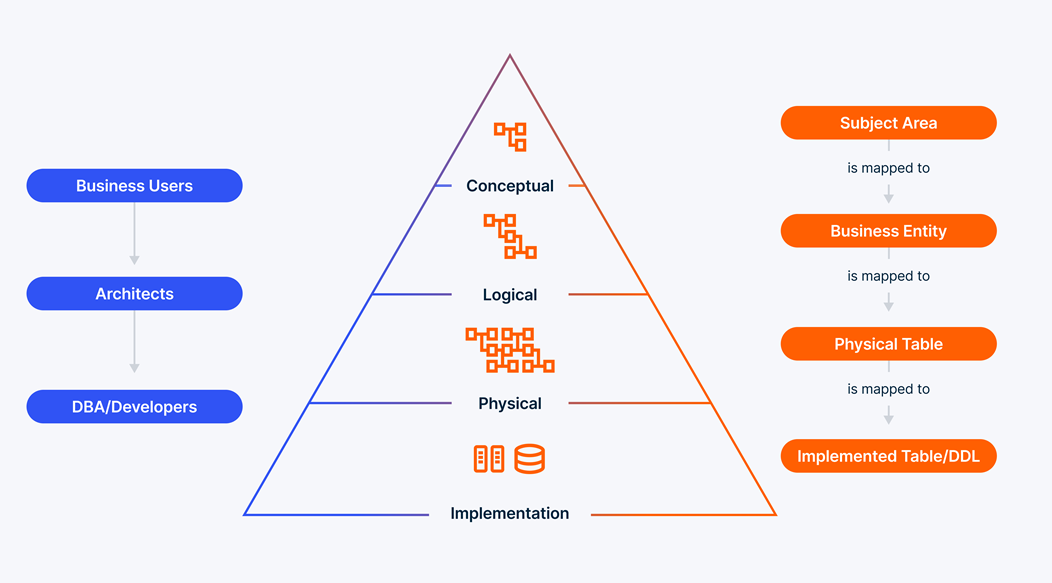 Quelle: https://www.theregister.com/2007/06/14/data_modelling_layers/
Schlüsselprinzipien der Datenmodellierung für KI
Die Prinzipien der Datenmodellierung für KI erweitern die Grundlagen der traditionellen Modellierung mit Anforderungen, die spezifisch für maschinelles Lernen und generative KI-Workloads sind. Fünf Prinzipien trennen konsequent KI-fähige Unternehmensdaten von allgemeinen Unternehmensdaten.
Datenqualität und -herkunft
KI-Modelle verstärken die Qualität – oder die Schwächen – der Daten, auf denen sie trainieren. Fehler, die ein Business-Intelligence-Bericht mit geringer Ungenauigkeit aufnehmen würde, werden zu systematischen Verzerrungen in einem Produktionsmodell. KI-Datenmodellierung behandelt die Datenqualität und -herkunft als erstklassige Designanforderungen und nicht als nachgelagerte Bereinigung. Das bedeutet, eine Abstammung in das Modell selbst einzubauen: Jedes Merkmal und jeder Trainingsdatensatz kann auf die Quellsysteme, die angewendeten Transformationen und den Zeitpunkt der Datenerfassung zurückverfolgt werden.
Feature Engineering und Wiederverwendung
Die teuerste Arbeit in der KI ist nicht das Training von Modellen; Es ist die Entwicklung der Funktionen, die diese Modelle verbrauchen. KI-Datenmodellierung etabliert gemeinsame, geregelte Definitionen von Features, sodass mehrere Modelle – und mehrere Teams – sie ohne Duplikation wiederverwenden können. Feature Stores, konsistente Namenskonventionen und eine gemeinsame Transformationslogik machen Features zu einem organisatorischen Vermögenswert statt zu einer Projektausgabe.
Skalierung und Leistung in der Datenbank
Enterprise-KI-Workloads arbeiten mit Datenmengen, die traditionelle Datenübertragungen unpraktisch machen. Das Verschieben von Terabytes an Trainingsdaten zwischen dem Lager, einer Feature-Engineering-Umgebung und einem Trainingscluster führt zu Latenz-, Kosten- und Reproduzierbarkeitsproblemen. Ein gut gestaltetes KI-Datenmodell ist rechenbewusst: Es unterstützt In-Database Feature Engineering, Training und Scoring, wo immer möglich, hält die Daten stationär und lässt die Rechenleistung dort laufen, wo sich die Daten bereits befinden.
Erklärbarkeit und Rückverfolgbarkeit
Modellerklärbarkeit ist zu einer gängigen Anforderung geworden, aber Datenerklärbarkeit ist ebenso wichtig und oft übersehen. KI-Datenmodellierung ermöglicht es, eine grundlegende, aber entscheidende Frage zu beantworten: Welche Daten haben dieses Modell trainiert, wann und aus welcher Quelle? Dies ist die Grundlage für Modellverwaltung, regulatorische Reaktion und die Fähigkeit, Ergebnisse Monate oder Jahre nach der Einführung eines Modells zu reproduzieren.
Branchenausrichtung
Allgemeine Datenmodelle zwingen Unternehmen dazu, für jede KI-Initiative dieselben grundlegenden Strukturen – Kunden, Produkt, Transaktion, Anspruch, Netzwerkereignis – neu aufzubauen. Die Ausrichtung des Datenmodells auf eine bewährte Branchen-Blaupause senkt diese Anfangskosten und gibt KI-Teams ein validiertes Schema, auf dem sie von Anfang eins aufbauen können.
Traditionelle Datenmodellierung vs. KI-Datenmodellierung
Traditionelle Datenmodellierung und KI-Datenmodellierung teilen dieselben grundlegenden Praktiken, unterscheiden sich jedoch in mehreren Dimensionen, die für die Art und Weise entscheiden, wie Unternehmensdaten aufgebaut, verwaltet und konsumiert werden. Die folgende Tabelle fasst die wichtigsten Unterschiede zusammen.
Traditionelle Datenmodellierung bleibt für Berichterstattung, Anwendungen und Governance-Analysen unerlässlich. KI-Datenmodellierung ersetzt sie nicht – sie erweitert dieselbe Grundlage, um die zusätzlichen Anforderungen von maschinellem Lernen und generativen KI-Workloads zu erfüllen.
Unternehmensüberlegungen zur KI-Datenmodellierung
Unternehmen stehen vor einer Reihe von Herausforderungen bei der KI-Datenmodellierung, die in kleineren oder Greenfield-Umgebungen nicht auftreten. Wenn man sie frühzeitig anspricht, entscheidet sie, ob KI-Initiativen skalieren oder ins Stocken kommen.
- Legacy-Schema-Schulden. Die meisten Unternehmen haben bereits seit Jahrzehnten in operative und analytische Datenmodelle investiert. KI-Initiativen rechtfertigen selten einen Neuaufbau von Grund auf. Der praktische Weg besteht darin, bestehende Modelle mit KI-spezifischen Schichten – Feature-Definitionen, Trainingsansichten, Vektorerweiterungen – zu erweitern, anstatt sie zu ersetzen.
- Hybride strukturierte und vektorielle Modellierung. Enterprise-KI-Workloads benötigen routinemäßig sowohl traditionelle strukturierte Daten (Kundendaten, Transaktionen, Produkthierarchien) als auch Vektordaten (Texteinbettungen, Bilddarstellungen). Ein modernes KI-Datenmodell muss beide Paradigmen in einer einzigen, kohärenten Struktur vereinbaren, anstatt sie als getrennte Systeme zu behandeln.
- Trainingsdatenlinie über den gesamten KI-Lebenszyklus hinweg. Regulierte Branchen verlangen zunehmend, dass Organisationen auf Abruf genau beantworten, auf welchen Daten ein Produktionsmodell trainiert wurde. Die Trainingsdatenlinie kann nach dem Einsatz nicht nachgerüstet werden; Es muss von Anfang an in das Datenmodell integriert werden.
- Organisatorische Überschneidungen zwischen Data Engineering und Data Science. In den meisten Unternehmen besitzen Data Engineers das Datenmodell und Data Scientists die Funktionen. Ohne gemeinsame Definitionen und kontrollierte Übergaben entfernen sich Funktionen von ihren Quelldaten, Modelle werden nicht reproduzierbar und Teams verschwenden Zyklen beim Abgleichen von Versionen. KI-Datenmodellierung formalisiert die Schnittstelle zwischen den beiden Disziplinen.
Branchendatenmodelle als KI-Beschleuniger
Die meisten Unternehmen bauen für jede neue KI-Initiative 60 % bis 70 % ihres Domänenmodells von Grund auf neu auf. Vorgefertigte Branchendatenmodelle senken diese Anfangskosten, indem sie einen validierten, dritten Normalform-Bauplan liefern, wie Daten innerhalb einer bestimmten Branche organisiert sind.
Teradata stellt Branchendatenmodelle bereit, die aus jahrzehntelangen Unternehmenskontakten entwickelt und mit Kunden in jeder Branche validiert wurden:
- Teradata Financial Services Logical Data Model (FSLDM) – ein umfassender Bauplan für Bankwesen, Versicherungen und Kapitalmärkte, der Kunden-, Produkt-, Transaktions- und Risikobereiche abdeckt.
- Teradata Communications Data Model (CDM) – ein telekommunikationsspezifisches Modell, das Abonnenten-, Netzwerk-, Nutzungs- und Abrechnungsdaten abdeckt.
- Teradata Healthcare Industry Data Model – ein Modell, das für Daten aus den Bereichen Kostenträger, Anbieter und Lebenswissenschaften entwickelt wurde.
Als Beschleuniger genutzt, verkürzen diese Branchendatenmodelle die KI-Laufzeit von Quartalen auf Wochen, indem sie die grundlegende Modellierungsarbeit eliminieren und einen konsistenten Ausgangspunkt bieten, den Data-Engineering- und Data-Science-Teams gemeinsam erweitern können.
Wie Teradata KI-Datenmodellierung angeht
Teradatas Ansatz zur KI-Datenmodellierung vereint vier Fähigkeiten, die Enterprise-KI-Workloads benötigen: vorgefertigte Industriedatenmodelle als Ausgangspunkte, In-Database Feature Engineering, End-to-End-Training und Scoring ohne Datenbewegung sowie Governance und Lineage, die für KI entwickelt wurden. Organisationen, die diesen Ansatz anwenden, modellieren ihre Daten einmal und verwenden sie in Analytics, Machine Learning und generativen KI-Workloads wieder, sodass Daten, Funktionen und Modelle im gesamten Unternehmen konsistent bleiben.
Häufig gestellte Fragen
Hast du noch Fragen zur KI-Datenmodellierung? Hier sind Antworten auf einige der häufigsten Fragen.
Kann KI Datenmodellierung übernehmen?
Kann KI Datenmodellierung übernehmen?
Ja, KI kann bedeutende Teile der Datenmodellierung automatisieren – einschließlich Schema-Generierung, Beziehungsinferenz und Datenbank-Reverse Engineering –, aber sie ersetzt nicht menschliche Datenarchitekten. Die Validierung der Geschäftssemantik, die Durchsetzung von Governance und die Ausrichtung des Modells auf spezifische Anwendungsfälle erfordern weiterhin menschliches Urteilsvermögen. In der Praxis arbeiten KI und Datenarchitekten zusammen: KI übernimmt repetitive mechanische Arbeiten, Architekten steuern die Strategie.
Was sind die vier Arten von Datenmodellierung?
Was sind die vier Arten von Datenmodellierung?
Die vier Arten der Datenmodellierung, die für KI verwendet werden, sind konzeptionell, logisch, physikalisch und Merkmalsmodellierung. Konzeptionelle Modellierung definiert Geschäftseinheiten und Beziehungen; logische Modellierung normalisiert sie zu einer plattformunabhängigen Struktur; Physikalische Modellierung bestimmt, wie sie gespeichert und abgerufen werden; Feature-Modellierung definiert die abgeleiteten Variablen, Einbettungen und Vektoren, die KI-Systeme direkt konsumieren.
Was ist der Unterschied zwischen Datenmodellierung und KI-Datenmodellierung?
Was ist der Unterschied zwischen Datenmodellierung und KI-Datenmodellierung?
Traditionelle Datenmodellierung strukturiert Daten für Anwendungen, Berichte und allgemeine Analyse. KI-Datenmodellierung erweitert diese Grundlage mit Funktionen, Embeddings, Vektorstrukturen und einer Trainingsdaten-Tradition, die speziell darauf ausgelegt ist, Unternehmensdaten durch maschinelles Lernen und generative KI-Systeme konsumierbar zu machen. Beide Disziplinen teilen dieselben konzeptuellen, logischen und physikalischen Schichten; KI-Datenmodellierung fügt ein viertes hinzu.
Welche Rolle spielen historische Daten bei der KI-Modellierung?
Welche Rolle spielen historische Daten bei der KI-Modellierung?
Historische Daten bilden die Grundlage der KI-Modellierung. Maschinelle Lernmodelle lernen Muster aus vergangenen Beobachtungen, und die Breite, Tiefe und Qualität historischer Daten bestimmen direkt die Genauigkeit des Modells. KI-Datenmodellierung bewahrt historische Daten mit zeitgemäßer Genauigkeit, sodass Funktionen so rekonstruiert werden können, wie sie zur Trainingszeit vorhanden waren – eine Voraussetzung für reproduzierbare, auditierbare und gesteuerte KI.