Überblick
Private KI ist die Praxis, künstliche Intelligenz-Modelle und die Daten, die sie trainieren, innerhalb der eigenen kontrollierten Umgebung einer Organisation – vor Ort, in einer privaten Cloud oder in einer souveränen Enklave – bereitzustellen, sodass sensible Daten, proprietäre Modellgewichte und regulierte Arbeitslasten niemals den Unternehmensperimeter verlassen.
Im Gegensatz zu öffentlichen KI-Diensten, die Daten an gemeinsame, vom Anbieter verwaltete Modelle senden, hält private KI Daten, Inferenz und Governance unter einem einzigen verantwortlichen Eigentümer. Für regulierte Branchen ist private KI zunehmend das einzige architektonische Muster, das sowohl KI-Ambitionen als auch die Compliance-Realität erfüllt.
Definition privater KI
Private KI bezeichnet den Einsatz von künstlichen Intelligenzsystemen in einer Umgebung, die von einer Organisation direkt kontrolliert wird, anstatt auf Infrastruktur, die von Dritten betrieben wird. Praktisch bedeutet das, dass die Daten, die zum Training oder Grounding eines Modells verwendet werden, die Modellgewichte selbst und die Rechenleistung, die Inferenz durchführt, alle innerhalb definierter organisatorischer Grenzen bleiben – sei es ein On-Premises-Rechenzentrum, eine dedizierte private Cloud oder eine souveräne Enklave, die unter strengen Wohnsitzanforderungen betrieben wird.
Es ist wichtig, private KI vom verwandten, aber getrennten Konzept der KI-Privatsphäre zu unterscheiden. KI-Privatsphäre ist ein nutzerorientiertes Anliegen: Sie behandelt, was mit den Anfragen, Eingaben und persönlichen Informationen passiert, die Personen an KI-Anwendungen wie öffentliche Chatbots einreichen. Private KI ist eine organisatorische Architektur: Sie bezieht sich darauf, was mit den Daten, dem proprietären Wissen und dem geistigen Eigentum eines Unternehmens geschieht, wenn KI im großen Maßstab eingesetzt wird. Die beiden überschneiden sich, sind aber nicht austauschbar – und diese Unterscheidung ist entscheidend, wenn Unternehmensleiter bewerten, wo KI in ihr Governance-Modell passt.
Die Bereitstellungsmuster, die als private KI gelten, liegen auf einem Spektrum. Einerseits bietet vollständig vor Ort private KI die stärkste Form der Kontrolle: Jedes Datenbyte und jedes Modellgewicht befindet sich auf der Infrastruktur, die die Organisation besitzt und betreibt. Eine private Cloud-Vereinbarung, bei der dedizierte Tenancy von einem vertrauenswürdigen Anbieter bereitgestellt wird, reduziert die Investitionsausgaben, während die meisten Souveränitätsvorteile erhalten bleiben. Am anderen Ende nutzt vertrauliches Rechnen in einer öffentlichen Cloud hardwarebasierte Verschlüsselung, um Workloads vom Cloud-Betreiber selbst zu isolieren – ein bedeutender Schritt nach vorn, der aber dennoch eine vertrauenswürdige Infrastruktur außerhalb des Unternehmensperimeters erfordert.
Wie private KI funktioniert
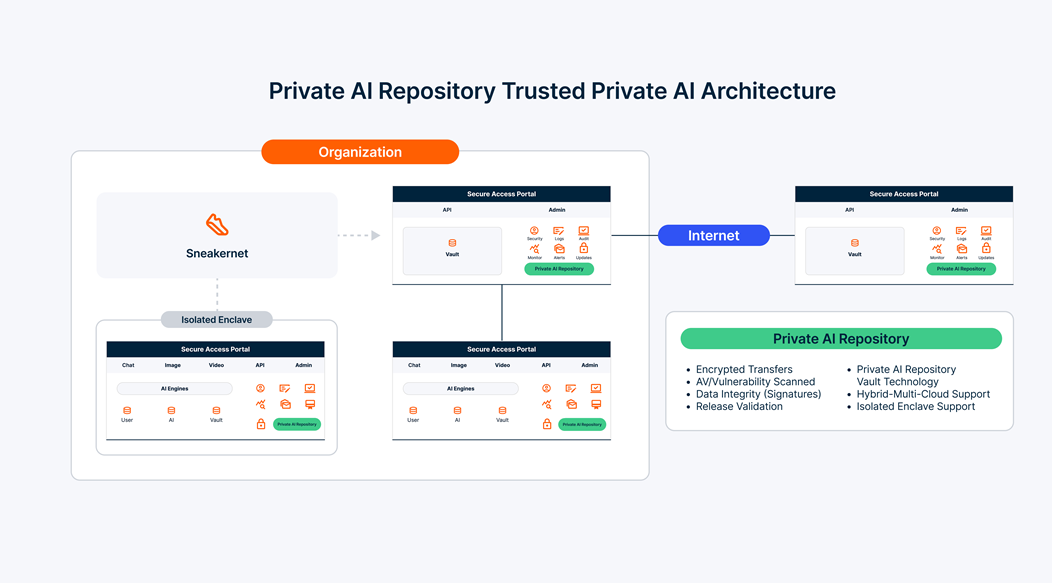
Eine private KI-Bereitstellung ist am besten als ein Stapel von vier funktionalen Schichten zu verstehen, von denen jede einen spezifischen Zweck hat, Daten, Modelle und Governance in Einklang zu bringen.
Die Datenschicht
Die Grundlage jedes privaten KI-Systems sind seine Daten. In einer privaten KI-Architektur befinden sich Trainingsdaten, Retrieval-Augmented Generation (RAG)-Dokumentspeicher und Vektor-Einbettungen alle auf dem Speicher, den die Organisation kontrolliert. Nichts wird zur Verarbeitung an einen externen Dienst kopiert, und nichts wird der Trainingspipeline eines Drittanbieters ausgesetzt. Für Unternehmen, die seit Jahrzehnten vertrauenswürdige Datensysteme – Kundendaten, Transaktionshistorie, klinische Unterlagen – aufgebaut haben, sorgt private KI dafür, dass die KI-Workloads der Zukunft auf genau diesem geregelten Fundament zurückgreifen.
Die Modellschicht
Die Modellschicht enthält die Algorithmen, die Daten in Vorhersagen, Klassifikationen oder generierte Inhalte umwandeln. Bei einer privaten KI-Implementierung umfasst dies Basismodelle (oft offene Foundation-Modelle, die in der Unternehmensumgebung eingesetzt werden), fein abgestimmte Modelle, die auf proprietären Daten trainiert sind, und die Einbettungen, die den Abruf unterstützen. Modellgewichte sind in vielerlei Hinsicht das sensibelste Gut, das ein privates KI-System schützt – ein fein abgestimmtes Modell hat das angesammelte Wissen der Organisation aufgenommen und darstellt, einmal trainiert, institutionelles geistiges Eigentum dar, das nicht durchsickern darf.
Die Schlussschicht
Schlussfolgerung ist, wenn eine Aufforderung zur Antwort wird. In einem privaten KI-System läuft die Inferenzschicht auf unternehmensgesteuerter Berechnung – oft GPU-beschleunigt – und gibt Antworten zurück, ohne den Prompt oder dessen Kontext an eine externe API zu senden. Diese Architektur bietet zwei wichtige Eigenschaften: Latenz ist vorhersehbar, da der Datenverkehr im Unternehmensnetzwerk bleibt; und sensible Inhalte in Eingabeaufforderungen, wie klinischen Notizen oder Kundenakten, verlassen niemals den Perimeter.
Die Governance-Ebene
Die Governance-Ebene macht private KI für Prüfer, Regulierungsbehörden sowie die eigenen Risiko- und Compliance-Teams des Unternehmens verteidigbar. Sie setzt Zugriffskontrollen durch, protokolliert jede Aufforderung und Antwort, pflegt die Modellabstammung und unterstützt die Audit-Trails, die nachträglich beweisen, wer welches Modell, auf welchen Daten und zu welchem Zweck verwendet hat. Governance ist keine Überlagerung auf privater KI; es ist eine Designeigenschaft davon.
 Quelle: https://www.redrake.com/portfolio-items/trusted-private-artificial-intelligence
Private KI vs. öffentliche KI
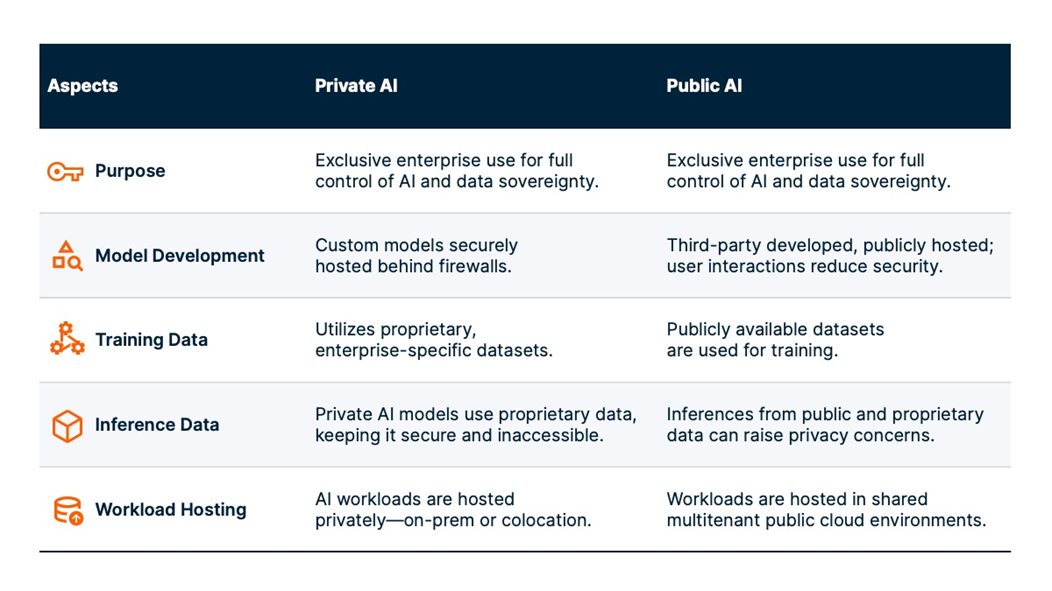
Die Wahl zwischen privater KI und öffentlicher KI hängt weniger davon ab, was "besser" ist, sondern vielmehr davon, welche architektonischen Kompromisse ein Unternehmen bereit ist einzugehen. Öffentliche KI-Dienste bieten schnellen Zugang zu Grenzkompetenzen und Skalierbarkeiten, die keine einzelne Organisation allein nachbilden könnte. Private KI bietet Kontrolle, Datensouveränität und die Möglichkeit, proprietäres Wissen wirklich proprietär zu halten.
Öffentliche KI ist auf Geschwindigkeit und Breite ausgelegt, während private KI auf Kontrolle und Verteidigung ausgelegt ist. Keines von beiden ist universell die richtige Antwort. Workloads mit geringer Sensitivität, die von schneller Iteration profitieren, laufen oft gut auf öffentlichen KI-Diensten. Regulierte Workloads, Workloads, die auf proprietärem Wissen angewiesen sind, und Workloads mit strengen Anforderungen an die Datenresidenz erfordern fast immer das private KI-Muster – und zunehmend setzen Unternehmen auf hybride Ansätze, die spezifische Workloads auf das passende Modell umleiten.
Vorteile privater KI
Für Unternehmen, die in regulierten oder IP-sensiblen Umgebungen tätig sind, sind die Vorteile privater KI strukturell und nicht inkrementell.
- Datensouveränität. Daten überschreiten niemals die Unternehmensgrenze, was bedeutet, dass Datenresidenzpflichten, vertragliche Datenschutzverpflichtungen und sektorspezifische Vorschriften wie HIPAA, GDPR, PCI DSS und FedRAMP durch die Architektur selbst und nicht durch Herstellerbestätigungen erfüllt werden.
- Modelbesitz. Fein abgestimmte Modellgewichte repräsentieren das angesammelte institutionelle Wissen – die Compliance-Standards einer Bank, die klinischen Denkmuster eines Krankenhauses, die Heuristiken zur Fehlererkennung eines Herstellers. Bei privater KI bleiben diese Gewichte das geistige Eigentum des Unternehmens und kein gemeinsames Objekt innerhalb der Trainingspipeline eines Drittanbieters.
- Vorhersehbare Kosten und Latenz. Die Preise pro Token skalieren im Unternehmensvolumen unangenehm. Private KI verlagert das Kostenprofil auf Investitionsausgaben plus vorhersehbare Betriebskosten, und die Inferenzlatenz wird eine Funktion des Unternehmensnetzwerks und nicht der API eines Anbieters.
- Verteidigungsfähige Audit-Trails. Jede Aufforderung, Abruf und Antwort wird auf der vom Unternehmen kontrollierten Infrastruktur protokolliert und erzeugt so die Art von vollständigem, zeitgestempeltem Datensatz, den Prüfer und Regulierungsbehörden erwarten.
- Ausrichtung auf die bestehende Governance. Für Organisationen, die bereits ausgereifte Data-Governance-Programme betreiben, erweitert private KI bestehende Kontrollen – Zugriffsmanagement, Lineage, Audit, Retention – um KI-Workloads abzudecken, anstatt ein völlig neues Governance-Modell für externe Anbieter zu benötigen.
Datenschutzschützende Techniken in privater KI
Private KI ist keine einzelne Technik – sie ist ein Stapel davon. Mehrere unterschiedliche Ansätze, oft zusammen eingesetzt, ermöglichen es, KI auf sensiblen Daten zu betreiben, ohne die Integrität dieser Daten oder der daraus lernenden Modelle zu gefährden.
Föderiertes Lernen
Federated Learning ermöglicht es, ein Modell über mehrere Organisationen oder Datensilos hinweg zu trainieren, ohne die zugrunde liegenden Daten zu verschieben. Jeder Teilnehmer trainiert das Modell lokal auf seinen eigenen Daten; Nur die Modellupdates – nicht die Daten selbst – werden geteilt und aggregiert. Dieses Muster ist besonders relevant in Gesundheitskonsortien und grenzüberschreitender finanzieller Zusammenarbeit, wo der Wert eines gemeinsamen Modells hoch ist, die Daten aber rechtlich nicht zusammengelegt werden können.
Unterschiedliche Privatsphäre
Differenzielle Privatsphäre bietet eine mathematische Garantie, dass einzelne Datensätze nicht aus den Ausgaben eines Modells rückentwickelt werden können. Durch die Einführung sorgfältig kalibrierter Rauschen in Training oder Inferenz können Organisationen sensible Daten statistisch nutzen und gleichzeitig sicherstellen, dass kein einzelner Beitrag eines einzelnen Datensatzes isoliert werden kann. Differenzielle Privatsphäre ist zunehmend eine Grunderwartung für KI-Systeme, die auf persönlichen oder regulierten Daten trainiert sind.
Vertrauliches Rechnen
Confidential Computing verwendet hardwarebasierte, sichere Enklaven, um Arbeitslasten von der Infrastruktur zu isolieren, die sie betreibt. Innerhalb der Enklave bleiben Daten und Code auch während der Verarbeitung verschlüsselt, was bedeutet, dass weder der Cloud-Betreiber noch ein kompromittiertes Host-Betriebssystem lesen können, womit das Modell arbeitet. Für Unternehmen, die KI in der privaten Cloud oder in einer von vertraulichen Rechenleistungen unterstützten Public Cloud betreiben, ist dies oft der Mechanismus, der das Vertrauen in der Infrastruktur auf ein akzeptables Niveau hebt.
Synthetische Daten
Synthetische Daten sind künstlich erzeugte Daten, die die statistischen und relationalen Eigenschaften realer Daten bewahren, ohne tatsächliche Datensätze zu enthalten. In privater KI können synthetische Daten die Trainingssets erweitern, Experimente in weniger kontrollierten Umgebungen unterstützen oder den Datenaustausch zwischen Teams ermöglichen, der sonst durch Datenschutzregeln blockiert wäre. Der Nutzen synthetischer Daten hängt stark von der Qualität des Erzeugungsprozesses ab – schlecht generierte synthetische Daten können Verzerrungen verursachen oder das statistische Schwanzverhalten übersehen, das in der Produktion am wichtigsten ist.
On-premises vs. private Cloud: Welche Form privater KI benötigen Sie?
"Private KI" ist kein einzelnes Bereitstellungsmuster – es ist ein Spektrum, und der richtige Punkt auf diesem Spektrum hängt vom Risikoprofil, der Kapitallage und den regulatorischen Verpflichtungen der Organisation ab.
- Die On-Premises-Implementierung platziert jede Ebene des KI-Systems auf die Infrastruktur, die die Organisation besitzt und betreibt. Sie bietet die stärkste Form der Souveränität: Kein Dritter hat physischen oder logischen Zugriff auf die Hardware, die Daten oder die Modelle. Der Kompromiss ist der Investitionsaufwand und die operative Verantwortung – die Organisation muss in die Infrastruktur selbst investieren und sie instand halten.
- Die Private Cloud-Bereitstellung setzt das KI-System auf eine dedizierte, einzelne Mieter-Infrastruktur, die von einem vertrauenswürdigen Anbieter bereitgestellt wird. Die Souveränität bleibt für die meisten praktischen Zwecke erhalten, und das Kapitalprofil verschiebt sich auf Betriebsausgaben. Der Kompromiss ist, dass ein Teil des Vertrauens an den Anbieter delegiert wird, dessen operative Praktiken nun im Bedrohungsmodell liegen.
- Confidential Computing in der Public Cloud nutzt hardwarebasierte Verschlüsselung, um Workloads vom Cloud-Betreiber selbst zu isolieren – ein bedeutender Fortschritt, der es Unternehmen ermöglicht, sensible KI-Workloads in gemeinsamer Infrastruktur mit starken kryptografischen Garantien zu betreiben. Es verringert das Vertrauen, das dem Cloud-Betreiber erfordert, aber es beseitigt es nicht; Das Unternehmen läuft weiterhin mit Infrastruktur, die es nicht besitzt.
Jedes dieser Muster qualifiziert sich nach einer vernünftigen Definition als private KI. Für Unternehmen, deren Bedrohungsmodelle, regulatorische Verpflichtungen oder geistiges Eigentum die stärkstmögliche Form der Kontrolle erfordern, bleibt die On-Premises-Implementierung der Anker. Für Unternehmen mit unterschiedlichen Einschränkungen kann eine private Cloud oder eine Confidential-Compute-Vereinbarung das richtige Gleichgewicht zwischen Kontrolle und Wirtschaftlichkeit bieten.
Branchen, die am meisten von privater KI profitieren
Die Einführung privater KI ist am stärksten in Branchen, in denen sensible Daten, regulatorische Verpflichtungen und proprietäres Wissen zusammenkommen. In diesen Bereichen ist öffentliche KI oft keine realistische Option – weder durch Politik, Regulierung noch durch die kommerziellen Realitäten des Schutzes geistigen Eigentums.
Finanzdienstleistungen
Finanzinstitute verwalten Kundenaufzeichnungen, Transaktionsdaten und proprietäre Analysemodelle, die nicht mit externen KI-Systemen konfrontiert werden können. Private KI ermöglicht es Banken, Modelle auf Know-Your-Customer-Dokumentation zu trainieren, Betrugserkennungssysteme auf vollständigen Transaktionsverläufen aufzubauen und generative KI-Assistenten für Compliance-Beauftragte einzusetzen – und das alles, ohne Kundendaten oder Modellgewichte außerhalb der Institution zu senden. Die proprietäre Compliance-Interpretation einer Bank, die sich über Jahrzehnte angesammelt hat, ist genau die Art von Vermögenswert, die private KI schützen soll.
 Quelle: https://www.techaheadcorp.com/blog/private-ai-for-enterprises-a-game-changer-to-safeguard-the-business
Gesundheitswesen und Lebenswissenschaften
Gesundheitseinrichtungen arbeiten unter einigen der strengsten Datenschutzregelungen überhaupt, und die Strafe für einen Verstoß gegen geschützte Gesundheitsinformationen ist hoch. Private KI ermöglicht es Krankenhäusern, klinische Notizen zusammenzufassen, medizinische Bildanalyse und patientenbezogene Unterstützungstools bereitzustellen, ohne dass PHI die verwaltete Umgebung des Krankenhauses verlässt. Life-Science-Organisationen, die KI für die Arzneimittelforschung anwenden, verlassen sich ebenfalls auf private KI, um proprietäre molekulare Daten und Forschungsressourcen zu schützen, die jahrelange Investitionen darstellen.
Herstellung
Hersteller wenden KI zunehmend für Qualitätskontrolle, vorausschauende Wartung und Lieferkettenoptimierung ein. Das Fehlererkennungsmodell eines Herstellers, das auf Bildern von Produktionslinienausgaben trainiert ist, vermittelt ein detailliertes Verständnis seiner Fehlerarten – Informationen, für die Wettbewerber bezahlen würden. Private KI speichert dieses Modell und die dahinterstehenden Trainingsdaten in der eigenen Umgebung des Herstellers.
Wie Teradata private KI unterstützt
Teradatas Ansatz für private KI basiert auf demselben Prinzip, das die Datenplattform des Unternehmens seit Jahrzehnten prägt: Workloads im Unternehmensmaßstab verdienen eine unternehmensweite Kontrolle. Private KI erweitert dieses Prinzip auf den gesamten KI-Modelllebenszyklus – sichere Feinabstimmung proprietärer Daten, abruf-augmentierte Generierung gegen sensible Dokumentspeicher, geregelte Modellbereitstellung sowie vollständige Audit und Lineage für jede Eingabe und Antwort.
Für Unternehmen, die bereits in vertrauenswürdige Aufzeichnungssysteme investiert haben, liegt der Vorteil in der Kontinuität. KI-Modelle, die zusammen mit den lagerbasierten Daten trainiert werden, die den Rest des Unternehmens steuern, übernehmen dieselben Zugangskontrollen, dieselbe Herkunft und dieselbe Governance-Haltung. Es besteht keine Notwendigkeit, ein paralleles Governance-Modell für KI-Workloads zu entwickeln – sie befinden sich innerhalb des bereits vorhandenen Modells.
Funktionen wie Teradatas Enterprise Vector Store, in-database-KI/ML-Funktionen und integrierte Unterstützung für Openweight-Foundation-Modelle durch Bring Your Own LLM ermöglichen es Daten- und Analyseteams, KI zu entwickeln, zu optimieren und bereitzustellen, ohne dass Daten oder Modelle jemals die vertraute Umgebung verlassen.
Um mehr darüber zu erfahren, wie Teradata private KI im Unternehmensmaßstab unterstützt, nehmen Sie Kontakt mit unserem Team auf.
Häufig gestellte Fragen
Hast du immer noch Fragen zu privater KI? Hier sind Antworten auf einige der häufigsten Fragen.
Gibt es eine KI, die privat ist?
Gibt es eine KI, die privat ist?
Ja. Ein privates KI-System ist eines, bei dem das Modell, die verwendeten Daten und die Rechenleistung alle innerhalb der kontrollierten Umgebung einer Organisation bleiben. Die Optionen reichen von selbst gehosteten Openweight-Foundation-Modellen auf Unternehmens-GPUs über dedizierte Private-Cloud-Deployments bis hin zu vertraulichen Compute-Arrangements in Public-Cloud-Infrastrukturen.
Wie funktioniert private KI?
Wie funktioniert private KI?
Private KI funktioniert, indem sie vier Schichten – Daten, Modelle, Inferenz und Governance – innerhalb der von der Organisation kontrollierten Infrastruktur behält. Trainingsdaten und Vektorspeicher liegen auf Unternehmensspeicher; Modellgewichte werden auf Enterprise Compute gehostet; Inferenz läuft ohne Kontakt mit externen APIs; und jede Aktion wird für Audit und Stammlinie protokolliert. Das Ergebnis ist ein KI-System, bei dem kein Prompt, kein Rekord und kein fein abgestimmtes Gewicht jemals den Umfang verlässt.
Wie viel kostet private KI?
Wie viel kostet private KI?
Private KI verschiebt das Kostenprofil von den Betriebskosten pro Token auf eine Kombination aus Kapitalinvestition und vorhersehbaren Betriebskosten. Bei geringem Umfang sind öffentliche KI-APIs in der Regel günstiger. Im Unternehmensvolumen – insbesondere bei Arbeitslasten mit strengen Governance-Anforderungen – ist private KI über mehrere Jahre oft kosteneffektiver, da die Kosten mit der Infrastrukturkapazität und nicht mit der Anzahl der Abfragen skalieren.
Was ist der Unterschied zwischen privater und öffentlicher KI?
Was ist der Unterschied zwischen privater und öffentlicher KI?
Öffentliche KI läuft auf gemeinsamer, vom Anbieter verwalteter Infrastruktur; private KI läuft innerhalb der eigenen kontrollierten Umgebung einer Organisation. Der Unterschied zeigt sich in jeder Dimension, die für die Unternehmensführung wichtig ist: wo Daten gespeichert sind, wer fein abgestimmte Modellgewichte besitzt, wie Governance durchgesetzt wird und wie die Kosten skalieren. Öffentliche KI optimiert Breite und Geschwindigkeit. Private KI optimiert Kontrolle, Souveränität und den Schutz von geistigem Eigentum.
Welche Branchen profitieren am meisten von privater KI?
Welche Branchen profitieren am meisten von privater KI?
Regulierte Branchen profitieren am meisten. Finanzdienstleistungen, Gesundheitswesen, Life Sciences, Regierung und Fertigung arbeiten alle mit sensiblen Daten, strengen regulatorischen Verpflichtungen oder proprietärem Wissen, das nicht an externe KI-Systeme gebunden werden darf. Jede Organisation, die ein wesentliches Risiko durch ein Datenleck, ein Modellgewichtsleck oder einen Compliance-Verstoß ausgesetzt wäre, ist ein Kandidat für private KI.
Ist private KI dasselbe wie KI-Privatsphäre?
Ist private KI dasselbe wie KI-Privatsphäre?
Nein. Private KI ist eine organisatorische Architektur – sie befasst sich, wo Daten und Modelle liegen und wer sie kontrolliert. KI-Datenschutz ist ein nutzerorientiertes Anliegen – es behandelt, was mit den Anfragen passiert, die Personen an KI-Anwendungen stellen. Ein Unternehmen kann ein privates KI-System betreiben und muss dennoch unabhängig über den Datenschutz der KI für die Endnutzer seiner KI-gestützten Produkte nachdenken.
Was sind die besten privaten KI-Tools?
Was sind die besten privaten KI-Tools?
Private KI wird über Kategorien und nicht über einzelne Werkzeuge bereitgestellt: ein Foundation-Modell oder fein abgestimmtes Modell, eine Compute-Infrastruktur für Training und Inferenz, einen Vektorspeicher für retrieval-augmented-Generierung, Governance- und Lineage-Tools sowie die Datenplattform, die die proprietären Informationen der Organisation speichert. Das beste private KI-Tool ist die Kombination, die mit dem bestehenden Datenstand, der Governance-Position und der operativen Reife eines Unternehmens übereinstimmt.