Überblick
Laut McKinsey verbringt der durchschnittliche Wissensarbeiter 9,3 Stunden pro Woche mit der Informationssuche. In den meisten Organisationen ist das Wissensmanagement-Tool, das sie gekauft haben, Teil des Problems.
Wissensmanagement-Tools sind Softwareplattformen, die dazu entwickelt wurden, institutionelles Wissen zu erfassen, zu organisieren und zu teilen, damit Mitarbeiter schnell die richtige Antwort finden können. Das ist das Versprechen. Die Realität ist, dass die meisten von ihnen scheitern – nicht, weil die Technologie defekt ist, sondern weil sie wie Aktenschränke eingesetzt werden und sich wie Suchmaschinen verhalten sollen. Innerhalb von 18 Monaten wird die durchschnittliche Wissensmanagement-Plattform zu einer weiteren digitalen Müll-Schublade: veraltete Seiten, fehlerhafte Suchanfragen, null Akzeptanz. Die KM-Softwaregeneration 2026 funktioniert anders. Dieser Leitfaden behandelt, was moderne Wissensmanagement-Tools tatsächlich tun, welche Hauptkategorien man kennen sollte, einen direkten Vergleich der heutigen Top-Plattformen und wie man eine auswählt, die das Team tatsächlich verwenden wird.
Was ist Wissensmanagement-Software?
Wissensmanagement-(KM)-Software ist eine Kategorie von Plattformen, die Organisationen dabei helfen, institutionelles Wissen zu erfassen, zu organisieren, abzurufen und zu erhalten – also Dokumente, Antworten, Prozesse und Fachwissen, die sonst über Werkzeuge und Köpfe der Menschen verteilt sind. Sie ist die Infrastruktur hinter einer funktionierenden einzigen Wahrheitsquelle.
Wissensmanagement vs. Wissensmanagement-Software
Wissensmanagement ist die Praxis. Wissensmanagement-Software ist die Plattform, die die Praxis ermöglicht.
Die Unterscheidung ist wichtig, weil viele KM-Initiativen auf Praxisebene scheitern – unklare Eigentumsverhältnisse, kein Content Health-Prozess, kein Anreiz für Experten beizutragen – und dann die Software verantwortlich machen. Bessere Software hilft. Sie ersetzt nicht das Wissen darüber, warum man das tut.
Was moderne KM-Software tatsächlich bewirkt
Moderne Wissensmanagement-Software übernimmt fünf Kernaufgaben:
- Erfassung: Wandelt verstreute Informationen – Dokumente, Tickets, Chats, Aufnahmen – in strukturiertes, wiederverwendbares Wissen um
- Organisieren: Taxonomie, Tags, Berechtigungen und Inhaltsbesitz anwenden, sodass Wissen in großem Maßstab navigierbar ist
- Abrufen: Die richtige Antwort wird der richtigen Person durch Suche, KI und In-Workflow-Bereitstellung (Slack, Teams, Browser) angezeigt
- Verteilt: Führt Wissen in die Werkzeuge, mit denen Menschen bereits arbeiten, anstatt einen Kontextwechsel zu erzwingen
- Verifizieren: Markiert veraltete Inhalte, leitet sie zur Überprüfung an die Eigentümer weiter und sorgt für das Vertrauen der Bibliothek über die Zeit
Der letzte Job – die Verifikation – ist der, den die meisten Legacy-Tools überspringen, und deshalb verrotten die meisten Wissensdatenbanken.
Wie sich die Kategorie verschoben hat
Vor fünf Jahren bedeutete "Wissensmanagement-Software" ein Wiki. Du hast Seiten geschrieben. Die Leute haben nach Schlüsselwörtern gesucht. Die Ergebnisse waren schlecht. Du hast aufgegeben.
Die heutigen führenden Wissensmanagementplattformen basieren auf KI-gestützter semantischer Suche, In-Workflow-Bereitstellung und automatisierter Inhaltsgesundheit. Sie beantworten Fragen in natürlicher Sprache, zeigen Wissen in Slack- und Browser-Tabs hervor, ohne dass Nutzer die App wechseln müssen, und markieren veraltete Inhalte, bevor sie jemanden in die Irre führen. Der Wandel dreht sich weniger um Funktionen und mehr darum, wo Wissen liegt – nicht mehr an einem separaten Ziel, sondern im Arbeitsfluss eingebettet.
Dieser Wandel ist auch der Grund, warum die "Wissensbasis" nur ein Teil eines modernen Stacks ist. Eine funktionierende KM-Strategie kombiniert heutzutage fast immer eine Wissensdatenbank mit einer KI-Schicht, die sie mit dem Rest deiner Systeme verbindet.
Arten von Wissensmanagement-Tools
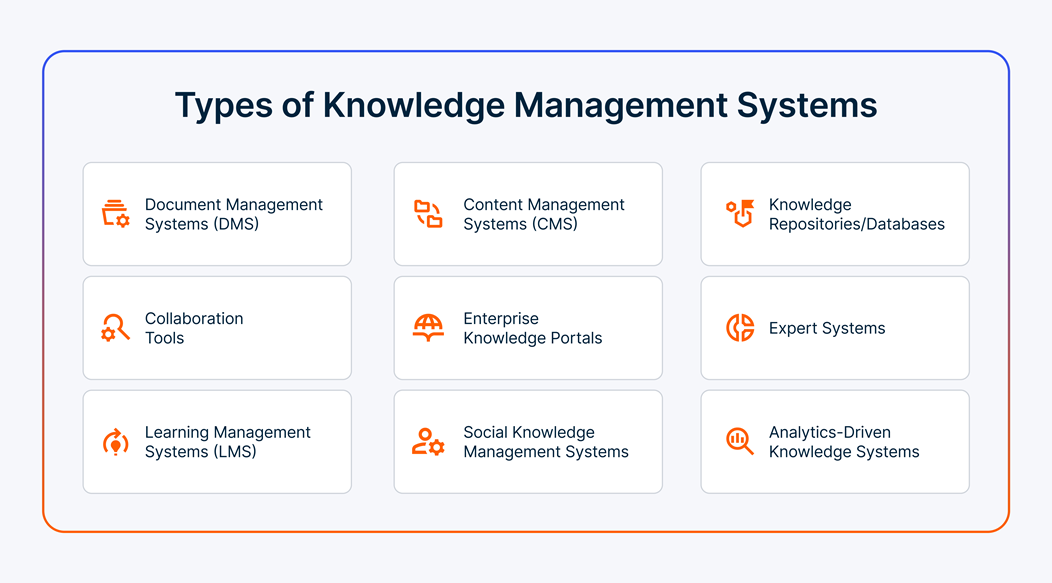
Die meisten Leitfäden listen fünf Kategorien auf. Die ehrliche Antwort lautet sechs – die sechste ist die, die 2026 am wichtigsten ist.
Wissensbasen
Selbstbedienungsbibliotheken mit Artikeln, FAQs, Anleitungen und Produktdokumentationen. Interne Wissensdatenbanken dienen den Mitarbeitern; externe dienen Kunden. Beide leben oder sterben nach Suchqualität. Beispiele: Document360, Zendesk Guide, HubSpot Knowledge Base, Helpjuice.
Interne Wikis und Kollaborationsplattformen
Team-Dokumentation und Kollaborationsräume. Seiten, verschachtelte Hierarchien, Inline-Kommentare, Versionsverlauf. Stärker beim Authoring als beim Abruf. Beispiele: Confluence, Notion, Slite, Nuclino.
Dokumentenmanagementsysteme (DMS)
Versionsbasierte Dateispeicherung mit Zugriffskontrollen, Zusammenarbeit und Compliance-Workflows. Nicht speziell für die Wissensabrufe entwickelt, aber oft das faktische System für Richtlinien, Verträge und formale Dokumentation. Beispiele: SharePoint, Google Drive, Box.
Lernmanagementsysteme (LMS)
Schulungsinhalte, Kurse, Quizze und Fähigkeitsverfolgung. Nahe an KM und nicht zum Kern – aber wichtig, wenn Onboarding, Compliance-Schulungen oder Zertifizierungen Teil des Wissensstapels sind. Beispiele: iSpring Learn, Docebo, Absorb LMS.
 Quelle: https://www.tettra.com/article/knowledge-management-process-101
Kundenbeziehungsmanagement (CRM) mit Wissensfunktionen
CRM-Plattformen integrieren zunehmend Wissensfunktionen, die auf kundenorientierte Teams ausgerichtet sind. Kontext zu Konten, bisherigen Interaktionen und Produktnutzung steht neben Artikeln und Playbooks. Beispiele: Salesforce Knowledge, HubSpot Service Hub.
KI-Enterprise-Suche und Datenüberlagerungen
Die aufkommende sechste Kategorie – und diejenige, die den Markt neu gestaltet. Diese Tools ersetzen nicht Ihren bestehenden Wissensstapel. Sie sitzen obendrauf, nehmen Inhalte aus allen Quellen (Wiki, Tickets, Dokumente, Chat) ein und nutzen LLMs und semantische Suche, um Antworten in den bereits genutzten Tools zu liefern. Beispiele: Guru, Glean, eesel AI, Read AI.
Top-Tools zum Wissensmanagement
Zehn Plattformen, die es wert sind, 2026 kennenzulernen, geordnet nach Kategorie, damit du auf die für deine Situation relevante Shortlist springen kannst. Keiner davon ist für sich genommen "die beste" – die Passform hängt davon ab, was du lösen möchtest.
Guru (KI-gesteuert)
KI-Wissensplattform, die Informationen aus Slack, Teams, Google Workspace, Salesforce und anderen Systemen zu einer berechtigungsbewussten Wissensschicht vereint. Am stärksten für intern ausgerichtete Teams, die verifizierte Antworten im Workflow über Browser-Erweiterungen und Slack liefern möchten. Eingebaute Verifizierung fordert Content Owner dazu auf, die Karten frisch zu halten. Am besten für: mittlere bis große Teams mit umfangreichen Werkzeugstacks und einem engagierten Wissensbesitzer.
Zusammenfluss (allgemein/Wiki)
Atlassians reifes Team-Wiki, tief integriert mit Jira. Strukturierte Seiten, Vorlagen, Räume und ein aktiver App-Marktplatz. Die Standardwahl für Ingenieur- und Produktorganisationen, die bereits im Atlassian-Ökosystem tätig sind. Stark in formaler Dokumentation; weniger stark darin, Wissen außerhalb der App zu präsentieren. Am besten für: Engineering-, Produkt- und technische Teams mit bestehenden Atlassian-Investitionen.
Notion (All-in-One)
Flexibler Arbeitsbereich, der Dokumente, Datenbanken, Aufgaben und Wikis kombiniert. Hochgradig anpassbar, schnell zu übernehmen, weniger meinungsstark bezüglich der Struktur. Enterprise Search mit KI sucht jetzt über verbundene Quellen (Slack, Drive, GitHub). Skalierbarkeit ist der Kompromiss: Was sich für 20 Personen reibungslos anfühlt, kann mit 2.000 Personen chaotisch wirken. Am besten für: kleine und wachsende Teams, die Flexibilität statt starrer Struktur wollen.
Document360 (technische Dokumente)
Speziell entwickelt für Produkt- und API-Dokumentation. Markdown- und WYSIWYG-Bearbeitung, starke Versionskontrolle, Kategorienmanagement und KI-Suche. Beliebt bei SaaS-Unternehmen für öffentliche Hilfezentren und Entwicklerportale. Support-Ticket-Ablenkungsfunktionen sind ausgereift. Am besten für: technische Redakteure, Produktteams und SaaS-Unternehmen, die die Qualität externer Dokumentationen priorisieren.
Zendesk Guide (Kundenservice)
Wissensdatenbank des Helpcenters, eng mit Zendesks Ticketing integriert. Mehrsprachige, KI-unterstützte Autorenarbeit, tiefgehende Analysen zur Artikelleistung und -ablenkung. Stärkst innerhalb eines Zendesk-Stacks; weniger überzeugend als eigenständiges Werk. Am besten für: Unterstützung von Organisationen im großen Maßstab, insbesondere solche, die bereits bei Zendesk sind.
Bloomfire (KI-gesteuertes Unternehmen)
Unternehmenswissensmanagement mit KI-gestützter Suche, Fragen und Antworten in natürlicher Sprache, automatisiertem Tagging und Inhaltsgesundheitsanalysen. Stark im Umgang mit gemischten Inhaltstypen – Video, Audio, PDFs – mit tiefgehender Indexierung und Transkriptsuche. Am besten für: mittelgroße bis große Unternehmen mit umfangreichem multimedialem Wissen und dem Bedarf an KI-Bereitschaft über Inhalte hinweg.
Slite (KI-gestütztes Wiki)
Leichtgewichtiges Wiki mit starker KI-Suche ("Ask Slite") und dem Fokus darauf, Dokumentation leicht auffindbar und aktuell zu halten. Integriert mit Slack, Google Workspace und anderen Team-Tools. Am besten für: wachsende Teams, die eine fokussierte Wissensdatenbank benötigen, ohne die Komplexität von Confluence oder die Ausbreitung von Notion.
Glean (KI-Suchüberlagerung für Unternehmen)
KI-gestützte Unternehmenssuche, die mit bestehenden Tools – Drive, Slack, Jira, Salesforce, GitHub, Confluence – verbunden ist und Fragen in natürlicher Sprache in allen beantwortet. Von Natur aus erlaubnisbewusst. Ersetzt nicht deinen Wissensstapel; macht ihn auffindbar. Am besten für: Unternehmen mit weitläufigen Toolchains und keinem Appetit auf Inhaltsmigration.
HubSpot Knowledge Base (integriertes CRM)
Wissensdatenbank gebündelt im Service Hub von HubSpot. Kostenlose Stufe verfügbar. Enge Integration mit HubSpot CRM, CMS und Marketingtools. Am besten, wenn HubSpot bereits der Schwerpunkt ist. Am besten für: HubSpot-native Unternehmen, die kundenorientiertes Wissen wollen, ohne einen weiteren Anbieter hinzufügen zu müssen.
BookStack / Wiki.js (Open Source)
Selbstgehostete, Open-Source-Wissensdatenbankplattformen. Kostenlos, anpassbar und vollständig unter Ihrer Kontrolle – was je nach Ihren Infrastrukturressourcen entweder das Verkaufsargument oder das Problem ist. Am besten für: Teams mit Datenresidenzbeschränkungen, sicherheitssensiblen Deployments oder starker interner Entwicklung.
Wie man Wissensmanagement-Software auswählt
Der Markt für Wissensmanagement-Software ist lauter als je zuvor. Jeder Anbieter beansprucht KI. Jeder Anbieter behauptet, unternehmensbereit zu sein. Die meisten von ihnen liegen nicht falsch – aber die Dimensionen, die sie tatsächlich trennen, zeigen sich im Kleingedruckten, nicht im Marketing.
5 Fragen, die Sie stellen sollten, bevor Sie eine Shortlist machen
Bevor Sie Werkzeuge vergleichen, beantworten Sie diese intern. Die Antworten verengen das Feld schneller als jede Merkmalsmatrix:
- Wer ist die Zielgruppe – interne Teams, Kunden oder beides? Interne Tools optimieren für Autorierung und Verifikation. Kundenorientierte Tools optimieren für SEO, Ablenkung und Lokalisierung. Beides mit einem Tool zu versuchen bedeutet meist, keines von beiden gut zu machen.
- Was ist die Suchmethode – Schlüsselwort-, semantisch oder LLM-basiert? Die Stichwortsuche im Jahr 2026 ist eine Obergrenze. Semantische Suche versteht die Absicht. LLM-gesteuerte Suche erzeugt Antworten mit Zitaten. Die Lücke zwischen ihnen ist der Unterschied zwischen "find the doc" und "find the answer".
- Wie handhebt das Tool Berechtigungen im großen Maßstab? Berechtigungsbewusstsein ist nicht nur Sicherheit – es ist der Grund, warum die KI-Suche entweder funktioniert oder durchsickert. Wenn deine RAG-Schicht das aufdeckt, was sie nicht sollte, ist das ein Berechtigungsproblem, kein KI-Problem.
- Wie sieht die Inhaltsgesundheitsgeschichte aus – wer hält sie aktuell? Fragen Sie jeden Anbieter: Wie erkennt Ihre Plattform veraltete Inhalte, weist sie einem Besitzer zu und markiert sie zur Prüfung? Wenn die Antwort lautet "Das Admin-Dashboard zeigt Ihnen eine Liste an", dann ist das keine Automatisierung. Das ist Hausaufgabe.
- Wie hoch ist der tatsächliche TCO – einschließlich Verwaltungsaufwand? Lizenzierung ist selten der größte Kostenfaktor. Verwaltungszeit, Content-Migrationsaufwand und laufende Kuratierung übertreffen sie häufig bei weitem. Frag nach den Gesamtkosten eines Referenzkunden im ersten Jahr, nicht nach dem Aufkleber pro Sitz.
Entscheidungsrahmen: Welche Kategorie passt zu Ihrer Situation
Die meisten Käufer verschwenden Wochen damit, Werkzeuge zu vergleichen, die nicht zur gleichen Kategorie gehören. Beginnen Sie zuerst mit der Kategorie und listen Sie sich dann innerhalb dieser Kategorie zusammen:
- Wählen Sie ein KI-Enterprise-Such-Overlay (Guru, Glean), wenn Wissen über viele bestehende Tools verteilt ist und eine Migration nicht möglich ist. Sie lösen ein Findbarkeitsproblem, kein Autorenproblem.
- Wählen Sie ein dediziertes Wiki oder eine Wissensplattform (Confluence, Notion, Slite, Bloomfire), wenn Sie eine strukturierte, einzige Wahrheitsquelle benötigen und bereit sind, in Autoren und Kuratierung zu investieren. Sie lösen ein Problem der Inhaltserstellung und -governance.
- Wählen Sie eine kundenorientierte Wissensdatenbank (Document360, Zendesk Guide, HubSpot), wenn Ablenkung, Selbstbedienung und externe Benutzererfahrung die Hauptziele sind. Sie lösen ein Problem im Support-Maßstab.
Der Fehler ist, zuerst aus der falschen Kategorie zu wählen und sich dann zu fragen, warum das Tool das Problem nicht löst.
Wie kann ich die Datensicherheit in Wissensmanagement-Software gewährleisten?
Eine Wissensmanagementplattform konzentriert die sensibelsten Inhalte einer Organisation – Kundendaten, interne Strategie, Mitarbeiterdaten, geistiges Eigentum. Das macht Sicherheit nicht zu einem Feature, sondern zum Boden. Fünf Bereiche verdienen eine explizite Prüfung, bevor Sie kaufen.
Zugriffskontrollen und Berechtigungsmodelle
Rollenbasierter Zugriff ist ein Table-Stakes. Gruppenvererbung, Überschreibungen pro Dokument und Isolation auf Mieterebene trennen unternehmensfähige Plattformen von kleinen Team-Tools. Die kritischere Frage im Jahr 2026: Respektiert die KI-Ebene die gleichen Berechtigungen wie der zugrundeliegende Inhalt? Naive Retrieval-Augmented Generation leakt häufig Inhalte, die Nutzer eigentlich nicht sehen sollten – ein Fehler, der erst offensichtlich wird, wenn er eintritt.
Authentifizierung und Bereitstellung
Erwarten Sie SSO über SAML oder OIDC, SCIM für automatisierte Benutzerbereitstellung und -deprovisionierung sowie MFA als Basis. SCIM ist wichtiger, als die meisten Käufer denken: Manuelles Offboarding ist der Weg, wie ehemalige Mitarbeiter jahrelang Zugriff auf Ihr Wiki behalten.
Verschlüsselung und Schlüsselverwaltung
AES-256 in Ruhe und TLS 1.3 im Transit sind die Standardwerte. Für regulierte Branchen sollten Kunden-Managed Keys (BYOK) und Hardware Security Module (HSM) Unterstützung verwendet werden. Standardverschlüsselung ist nicht dasselbe wie verteidigungsfähige Verschlüsselung.
Prüfungsprotokolle und Compliance-Zertifizierungen
Umfassende Audit-Protokolle – wer was und wann gesehen, bearbeitet, exportiert oder geteilt hat – bilden die Grundlage jeder Nachuntersuchung nach dem Vorfall. Compliance-Zertifizierungen, zu denen Sie fragen sollten: SOC 2 Typ II (Mindestanforderung), ISO 27001, HIPAA (bei Behandlung von Gesundheitsdaten), DSGVO (für EU-Daten) und FedRAMP (für US-Regierungsarbeit). Zertifizierungen sind nicht austauschbar; jede umfasst einen bestimmten Satz von Kontrollen.
Datenresidenz und KI-Datenverarbeitung
Zwei Fragen, die schriftlich gestellt werden sollten:
- Wo werden unsere Daten physisch gespeichert, und können wir die Region wählen? Das ist wichtig für Käufer aus der EU, APAC und der Regierung und zunehmend auch für Unternehmen mit grenzüberschreitenden Verpflichtungen.
- Werden unsere Inhalte verwendet, um die Modelle des Anbieters zu trainieren oder Drittanbieter-LLMs, mit denen sie integriert werden? Die Standardeinstellungen variieren. Einige Anbieter melden dich an, es sei denn, du meldest dich ab. Andere leiten Anfragen über Drittanbietermodelle (OpenAI, Anthropic) mit eigenen Retentionsrichtlinien. Bitte um ein schriftliches Datenflussdiagramm, nicht nach einer Marketingantwort.
Best Practices für die Migration von Daten in ein neues Wissensmanagementsystem
Die meisten KM-Migrationen scheitern stillschweigend. Inhalte verschieben sich. Menschen tun es nicht. Nach ein paar Wochen merken Nutzer, dass die neue Plattform genauso schwer zu durchsuchen ist wie die alte – weil derselbe chaotische Inhalt damit einherging.
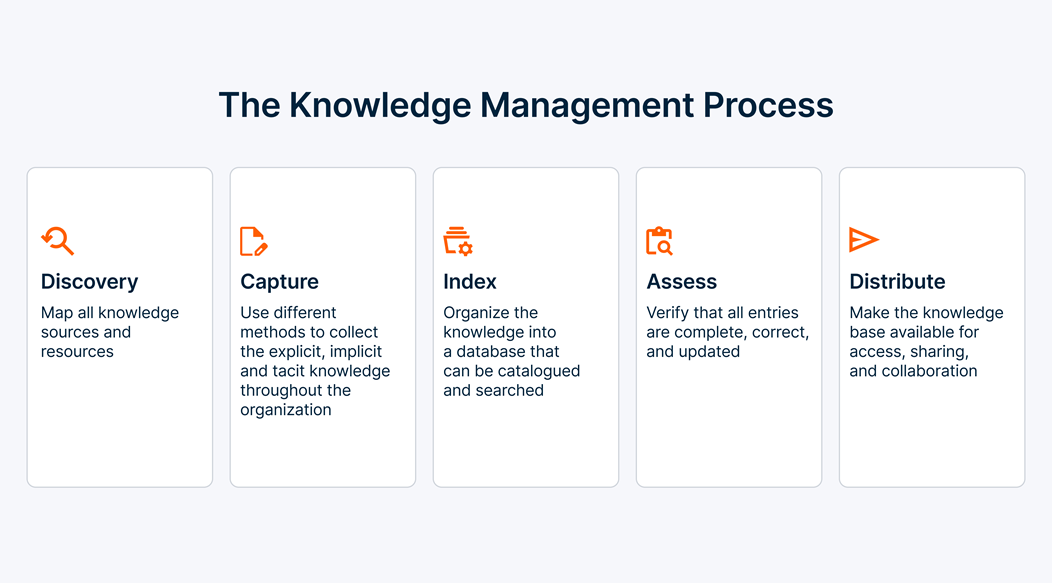
Schritt 1 – Aktuelle Inhalte überprüfen
Bevor Sie etwas migrieren, inventarisieren Sie das, was Sie haben. Wem gehört es, wann es zuletzt aktualisiert wurde, wie oft es abgerufen wird. Das typische Ergebnis: 30 % bis 40 % der Inhalte wurden seit über einem Jahr nicht berührt, und ein bedeutender Anteil ist schlichtweg doppelt. Man kann nicht reparieren, was man nicht misst.
 Quelle: https://www.tettra.com/article/knowledge-management-process-101
Schritt 2 – Definieren Sie die neue Taxonomie, bevor Sie umziehen
Kategorienstruktur, Tag-Vokabular, Berechtigungsgruppen, Content-Ownership-Modell. Bring das zuerst auf Papier richtig. Die Migration einer chaotischen Struktur in ein neues Tool verlagert das Problem nur und fügt eine Rechnung hinzu.
Schritt 3 – Reinigen und deduplizieren
Archiviere die veralteten. Führe die Duplikate zusammen. Lösche das veraltete. Dies ist der Schritt, der erfolgreiche Migrationen von denen trennt, die zu warnenden Geschichten werden. Die meisten Teams reduzieren das Inhaltsvolumen in dieser Phase um 40 % auf 60 % – und es ist die mit Abstand stärkste Hebelwirkung im gesamten Projekt.
Schritt 4 – Durchführung einer Pilotmigration
Wählen Sie ein Team und einen Inhaltstyp aus. Migrieren, Suchverhalten validieren, Berechtigungen testen, Formatierung prüfen. Lösen Sie die Probleme auf kleinem Platz, bevor Sie das Unternehmen überschneiden.
Schritt 5 – Berechtigungen nach der Migration validieren
Berechtigungsdrift ist das größte Sicherheitsrisiko bei KM-Migrationen. Überprüfen Sie vor dem Einloggen, dass die Nutzer nur das sehen, was sie sehen sollten. Verlassen Sie sich nicht darauf, dass die alten Systemeinstellungen sauber übersetzt werden – das tun sie selten.
Schritt 6 – Phasenüberstellung mit parallelem Zugriff
Halte das Altsystem 30 bis 60 Tage nur lesbar. Lass Power-User Lücken aufdecken. Erzwungene harte Cutovers erzeugen Rückschläge und untergraben die Verbreitung. Ein ruhiger, phasenweiser Cutover ist fast immer günstiger als ein sauberer.
Wie messe ich den ROI eines Wissensmanagementsystems?
Jeder KM-Anbieter hat eine Präsentation über die eingesparten Zeit. Nur sehr wenige Käufer können nach der Bereitstellung zeigen, was die Plattform tatsächlich zurückgegeben hat. Die Lösung ist, sich auf die Messung vor dem Einsatz zu einigen – nicht danach.
Eine einfache ROI-Formel, in die du dich einschließen kannst.
Die Berechnung, mit der die meisten Käufer beginnen sollten:
Eingesparte Stunden pro Mitarbeiter und Woche × Stundenkosten × Teamgröße × 50 Wochen) − (Plattformkosten + Verwaltungskosten) = jährlicher ROI
Ausgearbeitetes Beispiel: Ein Unternehmen mit 100 Wissensarbeitern spart drei Stunden pro Mitarbeiter und Woche durch bessere Suche und In-Workflow-Bereitstellung. Bei einem voll belasteten Stundenpreis von 75 US-Dollar entspricht das:
3 × 75 $ × 100 × 50 = 1,125 Mio. $ an erholter Produktivität
Weniger Plattformkosten (~30.000 $/Jahr) und Verwaltungskosten (~60.000 $/Jahr)
Im ersten Jahr ≈ Netto-ROI von 1 Million US-Dollar jährlich
Die Formel ist nicht dazu gedacht, präzise zu sein. Sie soll das Gespräch ehrlich halten. Wenn der Preis eines Anbieters in einer solchen Serviette nicht gerechtfertigt werden kann, wird er später nicht gerechtfertigt.
Wissensmanagement, KI und die Unternehmensgrundlage
Ein abschließender Gedanke, der es zu betonen lohnt: Wissensmanagement-Software ist kein eigenständiger Kauf mehr. Sie wird zur Kontextebene für Unternehmens-KI.
Jeder KI-Agent, Copilot und autonome Workflow, den eine Organisation einsetzt, ist nur so gut wie das Wissen, auf das sie zurückgegriffen hat. Intelligenz ohne Kontext halluziniert.
Kontext ohne Governance-Leaks. Die Organisationen, die in den nächsten drei Jahren das Beste aus KI herausholen werden, sind diejenigen, die ihre Wissensinfrastruktur als Grundlage und nicht als Nachgedanke behandeln – KI auf vertrauenswürdigen, kontrollierten, erlaubnisbewussten Inhalten verankern, anstatt zu hoffen, dass das Modell es herausfindet.
Das ist der Wechsel hinter allem in diesem Leitfaden. Die richtigen Wissensmanagement-Tools sind nicht nur Suchfelder. Sie sind das Substrat, auf dem Unternehmens-KI arbeitet.
Häufig gestellte Fragen
Haben Sie noch Fragen zu Tools zum Wissensmanagement? Hier sind Antworten auf einige der häufigsten Tools.
Welche Werkzeuge gibt es im Wissensmanagement?
Welche Werkzeuge gibt es im Wissensmanagement?
Wissensmanagement-Tools lassen sich in sechs Hauptkategorien einteilen: Wissensdatenbanken (Self-Service-Bibliotheken für Mitarbeiter oder Kunden), interne Wikis und Kollaborationsplattformen (wie Confluence und Notion), Dokumentenmanagementsysteme (SharePoint, Google Drive), Lernmanagementsysteme (iSpring, Docebo), CRM-Plattformen mit eingebetteten Wissensfunktionen (Salesforce, HubSpot) sowie KI-Enterprise-Suche und Wissensüberlagerungen (Guru, Glean). Die meisten Organisationen kombinieren am Ende zwei oder drei davon, anstatt auf ein einziges Tool zurückzugreifen.
Was sind die 7 Arten des Wissensmanagements?
Was sind die 7 Arten des Wissensmanagements?
Einige Frameworks listen sieben Typen auf, indem sie interne und externe Wissensdatenbanken trennen, strukturierte von unstrukturierter Dokumentation unterscheiden oder KI-gestützte Suche in eine eigene Kategorie unterteilen. In der Praxis ist der nützliche Unterschied zwischen stillschweigendem Wissen (was Menschen wissen und nicht aufgeschrieben haben) und explizitem Wissen (was dokumentiert ist). Gute KM-Tools helfen, stillschweigendes Wissen in explizites Wissen umzuwandeln – meist, indem sie Erfassung und Verifikation erleichtern als der Status quo.
Was sind die 5 C's des Wissensmanagements?
Was sind die 5 C's des Wissensmanagements?
Die 5 C's sind Capture, Curate, Connect, Collaborate und Contribute. Capture umfasst die Umwandlung von Gesprächen, Tickets und Stammeswissen in dokumentierte Inhalte. Curate bedeutet, es organisiert, getaggt und aktuell zu halten. Connect bedeutet, verwandtes Wissen über Tools und Teams hinweg zu verknüpfen. Collaborate bedeutet, Co-Autoren und Feedback zu ermöglichen. Beitrag bedeutet, Experten leicht zu machen, Wissen ohne Reibung hinzuzufügen. Schwächen in einem Bereich untergraben die anderen.
Was ist der Unterschied zwischen einer Wissensmanagementplattform und einer Wissensdatenbank?
Was ist der Unterschied zwischen einer Wissensmanagementplattform und einer Wissensdatenbank?
Eine Wissensdatenbank ist eine Bibliothek – ein strukturiertes Archiv von Artikeln und Dokumenten. Eine Wissensmanagementplattform ist das vollständige System, das eine Wissensdatenbank sowie Autorentools, Suche, Berechtigungen, Analysen, Inhalts-Gesundheits-Automatisierung und Integrationen umfasst. Jede Wissensmanagementplattform enthält eine Wissensdatenbank. Nicht jede Wissensdatenbank ist eine vollständige Plattform.
Sind KI-Wissensmanagement-Tools tatsächlich besser?
Sind KI-Wissensmanagement-Tools tatsächlich besser?
Für Suche und Abruf – ja – erheblich. Semantische und LLM-gestützte Suche übertrifft die Keyword-Suche in fast jedem Benchmark, und generative Antworten mit Zitaten sparen Echtzeit. Die Vorbehalte: KI verstärkt sowohl die Stärken als auch die Schwächen des zugrundeliegenden Inhalts. Wenn der Inhalt veraltet oder unvollständig ist, liefert KI selbstbewusst schlechte Antworten. Wenn Berechtigungen nicht korrekt zugeordnet sind, wird KI Inhalte aufdecken, die sie nicht sollte. Die richtigen KI-Wissensmanagement-Tools lösen das. Die falschen beschleunigen bestehende Probleme.
Wie viel kostet Wissensmanagement-Software?
Wie viel kostet Wissensmanagement-Software?
Open-Source-Optionen (BookStack, Wiki.js) sind kostenlos, verursachen aber Infrastruktur- und Wartungskosten. Kommerzielle Tools liegen typischerweise zwischen 4 und 15 Dollar pro Nutzer und Monat am unteren Ende (Slite, Notion, Tettra) bis zu 50+ $ pro Nutzer und Monat für Enterprise-Plattformen mit KI-Fähigkeiten und fortschrittlicher Governance (Guru, Glean, Bloomfire). Die tatsächlichen Kosten übersteigen fast immer die Lizenzierung, sobald Admin-Zeit, Migrationsaufwand und laufende Inhaltskuratierung einbezogen sind.
Wie lange dauert eine KM-Implementierung?
Wie lange dauert eine KM-Implementierung?
Eine einfache Bereitstellung mit einem kleinen Team kann innerhalb von 2 bis 4 Wochen produktiv sein. Eine Mid-Market-Rollout mit Inhaltsmigration und Integrationen dauert typischerweise 2 bis 3 Monate. Eine Enterprise-Bereitstellung mit Berechtigungsmapping, Migration von Legacy-Systemen und formalen Governance-Prozessen dauert mindestens 3 bis 6 Monate. Die Variable, die den Zeitplan am meisten beeinflusst, ist nicht die Software – es ist die Content-Cleanup.
Was ist die beste Wissensmanagement-Software für kleine Unternehmen?
Was ist die beste Wissensmanagement-Software für kleine Unternehmen?
Für Teams unter 50 Personen ist die beste Wissensmanagement-Software in der Regel die leichteste, die den Anwendungsfall abdeckt. Notion und Slite bieten starke kostenlose oder kostengünstige Stufen mit schneller Verbreitung. Der Service Hub von HubSpot enthält eine kostenlose Wissensdatenbank, sofern das Team bereits HubSpot CRM nutzt. Für Open-Source-orientierte Teams ist BookStack eine glaubwürdige, selbstgehostete Option. Enterprise-Tools (Guru, Glean, Confluence) werden in der Regel ab 50–100 Nutzern lohnenswert oder sogar früher, wenn Sicherheit und Compliance Priorität haben.