
Unternehmens-KI hat einen entscheidenden Übergangspunkt erreicht. Die Anfangsphase der generativen KI konzentrierte sich auf individuelle Produktivität – Textgenerierung, Zusammenfassung von Dokumenten und Unterstützung von Entwicklern. Organisatorischer Wert erfordert jedoch, über einfache Eingaben hinaus zu einer autonomen, mehrstufigen Ausführung zu gehen. Dieser Wandel führt agentische KI ein: autonome Systeme, die in der Lage sind, Umweltzustände zu erkennen, komplexe Arbeitsabläufe zu schließen, Sequenzen zu planen und Aktionen in Unternehmenssystemen auszuführen.
Obwohl das Interesse an agentischen Workflows hoch ist, bleibt der Übergang vom Proof-of-Concept zur Produktion für IT-Führungskräfte in Unternehmen ein Hindernis: Eine IDC-Studie befragter Unternehmen ergab, dass etwa 88 % der KI-Proof-of-Concept nie in die Produktion gelangen. Die Bereitstellung autonomer Agenten über verteilte hybride Architekturen hinweg stellt besondere Herausforderungen für Ingenieurwesen und Governance dar. Die Erreichung operativer Skalierung erfordert eine agentische KI-Architektur, die zuverlässigen Kontext, kontinuierliche Governance und skalierbare Hochleistungsrechenleistung bietet. Organisationen, die auf einer einheitlichen Datenbasis aufbauen, werden erfolgreich von experimentellen Chatbots zu autonomen, wertsteigernden KI-Agenten wechseln.
Wichtige Erkenntnisse
- Die Produktionslücke: Laut der Arrested Automation-studie von Teradata planen 90 % der IT-Führungskräfte in Unternehmen, Investitionen in KI-Agenten zu erhöhen, doch nur 7 % haben Agenten in mehrstufige Produktions-Workflows operativisiert.
- Kontext über Modellgröße: Die Modellparameter-Skalierung kann die Kontextfragmentierung nicht lösen. KI-Agenten benötigen Echtzeitzugriff auf Geschäftslogik, semantische Beziehungen und Transaktionsgeschichten.
- Fünfschichtiges architektonisches Framework: Die Skalierung agentischer Workflows erfordert eine strukturierte Grundlage, die Wissen und Daten, Kontext, Agenten sowie Orchestrierung, Governance und Geschäftsergebnisse umfasst.
- Vereinheitlichte Recheninfrastruktur: Hochzeitgleichzeitige Agenten-Workflows erfordern eine dedizierte Compute-Trennung, wobei Active Compute für kontinuierliche Baseline-Analysen und elastische Compute für dynamische Agentenskalierung verwendet wird.
Der Engpass der Enterprise-KI: Warum Piloten abwürgen
Unternehmensorganisationen investieren stark in KI-Technologien, aber die Operationalisierung autonomer Arbeitsabläufe bleibt schwierig. Die oben erwähnte IDC-Studie der befragten Unternehmen, die ergab, dass etwa 88 % der KI-Proof-of-Concept nie in die Produktion gelangen, verweist auf eine geringe organisatorische Bereitschaft bei Daten, Prozessen und IT-Infrastruktur. Zu verstehen, warum diese Initiativen ins Stocken geraten, ist für technische Führungskräfte bei der Entwicklung skalierbarer Architekturen unerlässlich.
Über persönliche KI hinaus: Der Wandel zur organisatorischen KI
Die erste Welle der generativen KI-einführung konzentrierte sich auf persönliche KI – Werkzeuge, die E-Mails verfassen, isolierte Nutzeranfragen beantworten oder Codeschnipsel schreiben. Persönliche KI arbeitet mit geringem systemischem Risiko; menschliche Aufsicht validiert jedes Ergebnis vor der Ausführung.
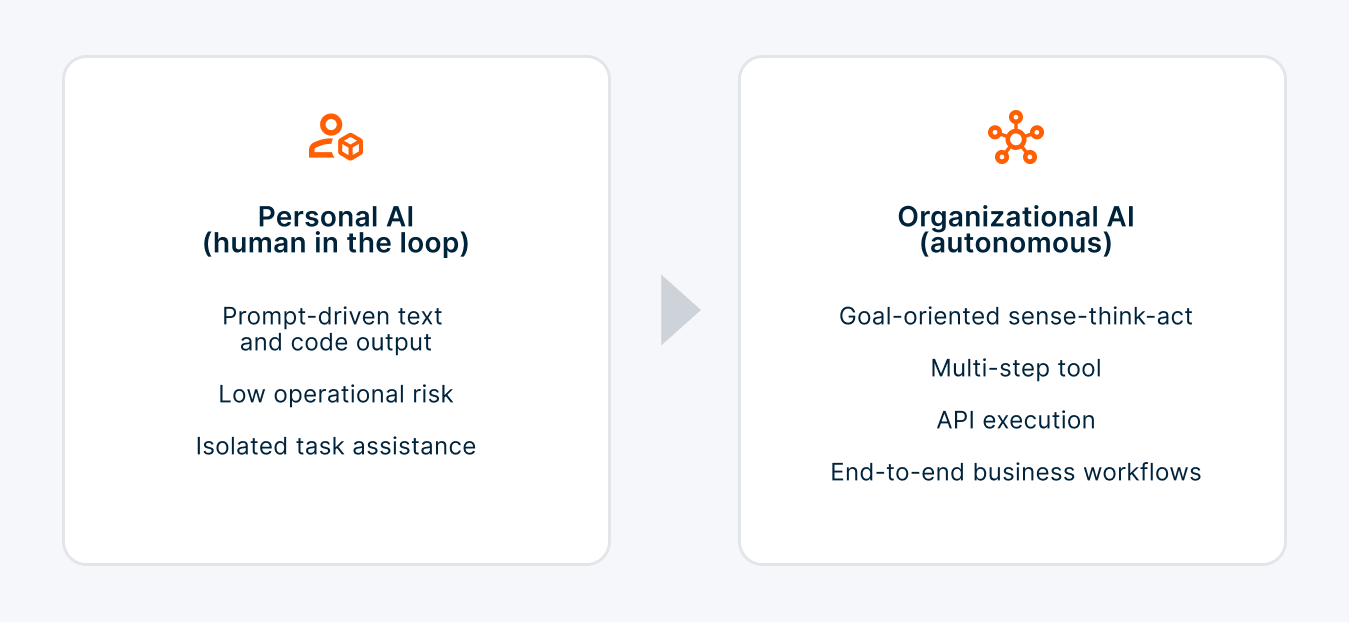
Im Gegensatz dazu benötigt organisatorische KI autonome Agenten , die End-to-End-Geschäftsprozesse ohne schrittweise menschliches Eingreifen ausführen. Ein organisatorischer Agent muss Unternehmensdatenbanken abfragen, operative Einschränkungen bewerten, externe Software-Anwendungsschnittstellen auslösen und Transaktionen dokumentieren. Der Übergang von persönlicher Aufgabenunterstützung zur organisatorischen Autonomie vervielfacht die technische Komplexität. Wenn ein Agent autonom innerhalb eines Kerngeschäftssystems handelt, kann eine einzelne halluzinierte Abfrage oder ein falscher Logikfluss die Unternehmensabläufe stören.
Datenkontext und Governance-Defizite
Die Hauptursache für Misserfolge von agentischen Piloten ist nicht die Modellintelligenz; es ist Kontextfragmentierung und schwache Governance. Teradatas Arrested Automation-Forschung – eine Wakefield Research-Umfrage unter 1.000 leitenden Technologie- und Datenführern, beauftragt von Teradata und im Frühjahr 2026 durchgeführt – liefert entscheidende Erkenntnisse zur Unternehmensbereitschaft.
- Hohe Investitionsabsicht: 90 % der IT- und Datenverantwortlichen planen, in den nächsten 12 Monaten die Investitionen in agentische KI zu erhöhen.
- Begrenzte finanzielle Rendite: 63 % geben an, von den aktuellen Implementierungen von KI-Agenten nur minimale bis keine messbare finanzielle Rendite zu erzielen.
- Geringe operative Einsatzbereitschaft: Nur 7 % haben autonome Agenten erfolgreich in Produktionsprozesse eingesetzt.
- Die Kontextlücke: 77 % geben an, dass 20 % oder weniger ihrer gesamten Unternehmensdaten ausreichend kontextualisiert und strukturiert sind, um KI-Agenten zu konsumieren.
Wenn autonome Agenten auf getrennten Datensilos aufgebaut werden, fehlt ihnen das operative Bewusstsein, das erforderlich ist, um genaue Entscheidungen zu treffen. Ohne einheitliche Datenabstammung, granulare Zugriffskontrollen und semantischem Echtzeitkontext erzielen Unternehmensagenten unzuverlässige Ergebnisse, was die Implementierung in der Testphase verzögert.
Der fünfschichtige agentische Architektur-Blueprint
Um die Lücke zwischen Pilotprogrammen und Produktionssystemen zu überbrücken, benötigen technische Teams einen einheitlichen architektonischen Bauplan. In unternehmensbezogenen Begriffen ist agentische KI-Architektur das Systemdesign, das autonomen Agenten Zugang zu Wissen, Kontext und Werkzeugen gibt, damit sie mehrstufige Arbeit ausführen und dafür verantwortlich gemacht werden können. Das folgende fünfschichtige Modell bildet die strukturelle Grundlage.
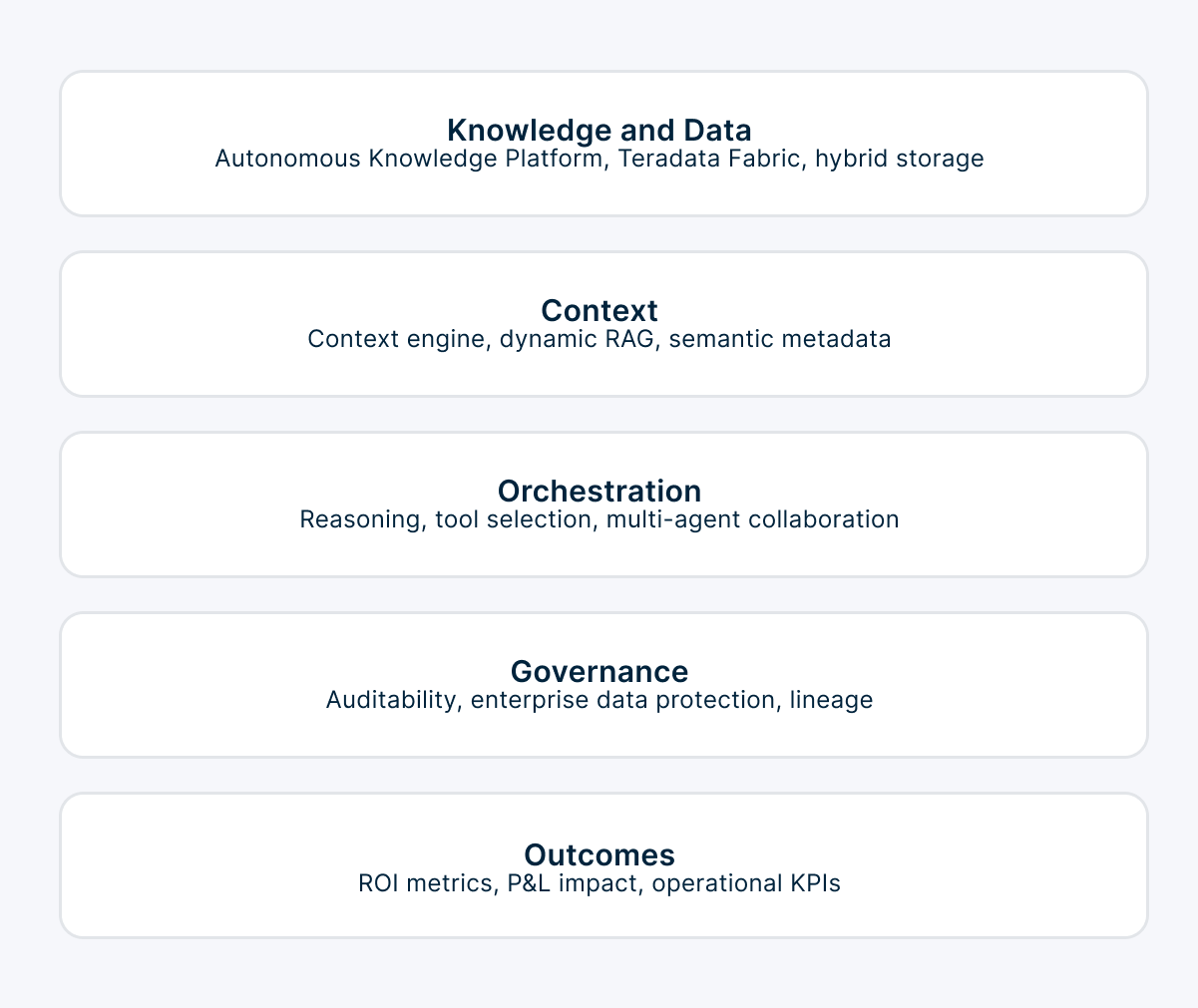
1. Wissens- und Datenschicht
Die Grundlage jedes agentischen Systems ist die Datenschicht. Autonomes Schließen erfordert sofortigen Zugriff auf transaktionale Datensätze, historische Metriken, Vektor-Einbettungen und unstrukturierte Unternehmensdateien.
In dieser Schicht bietet die Autonomous Knowledge Platform eine hochdurchgängige relationale Verarbeitung in Kombination mit Vektormanagement-Funktionen. Anstatt große Datensätze in externe Vektordatenbanken zu exportieren – was Synchronisationslatenz und Sicherheitslücken mit sich bringt – nutzen Organisationen direkt innerhalb der Analyse-Engine Vektorverarbeitung und fortschrittliche Analysefunktionen.
Die Datenintegration über hybride Cloud-Umgebungen wird von Teradata Fabric übernommen, das eine Zero-Copy-Datenvirtualisierung ermöglicht, sodass autonome Agenten entfernte Datenspeicher ohne kostspielige Datenübertragungen abfragen können. Indem die Daten in der Basis einheitlich bleiben, arbeiten Agenten mit einer einzigen Wahrheitsquelle.
2. Kontextschicht
Daten allein reichen für autonome Entscheidungen nicht aus; Agenten benötigen operativen Kontext. Context liefert die semantischen Regeln, Sicherheitsrichtlinien, Geschäftslogik und Beziehungskartierungen, die Rohdaten in umsetzbares Unternehmenswissen verwandeln.
Die Kontextschicht verwendet eine Kontext-Engine , um den relevanten Geschäftskontext für Agenten-Prompts dynamisch zusammenzustellen. Die Context Engine synthetisiert operative Metadaten, aktive Benutzersitzungen, Schema-Definitionen und Domänenregeln, bevor ein Agent einen Plan ausführt. Indem Agenten-Prompts im Echtzeit-Unternehmenskontext verankert werden, reduzieren Organisationen Halluzinationen und halten Agentenaktionen konform mit den organisatorischen Regeln.
3. Agenten und Orchestrierungsschicht
Die Agenten- und Orchestrierungsschicht fungiert als Schlussfolgerungsmotor der Architektur. Diese Schicht übernimmt Aufgabenzerlegung, mehrstufige Planung, Werkzeugauswahl und Ausführungsüberwachung.
Innerhalb dieser Schicht nutzen Entwickler Teradata AI Studio , um benutzerdefinierte agentische Workflows mit Agentenvorlagen, Modellintegrationsframeworks und Orchestrierungsüberwachung zu erstellen, zu testen und bereitzustellen. Wenn komplexe Aufgaben die Zusammenarbeit mehrerer Agenten erfordern, teilen Orchestrierungsprotokolle die Arbeitslast auf:
- Planungsagenten teilen die wichtigsten Geschäftsziele in aufeinanderfolgende Teilaufgaben auf.
- Ausführungsagenten interagieren mit Datenbankroutinen, führen Softwareoberflächen und Prozessanalysen aus.
- Verifikationsagenten validieren Zwischenergebnisse vor der endgültigen Ausführung anhand der Unternehmens-Compliance-Regeln.
Diese strukturierte Arbeitsteilung sorgt dafür, dass die autonome Ausführung deterministisch, auditierbar und mit den Systemrichtlinien übereinstimmt bleibt.
4. Governance- und Auditabilitätsschicht
Autonome Ausführung erfordert kontinuierliche operative Governance. Wenn ein Agent Finanzunterlagen ändert, Lieferkettenaufträge umleitet oder Kundenkontoeinstellungen anpasst, muss jeder Entscheidungsschritt vollständig prüfbar sein. Die Governance-Schicht wendet Sicherheitskontrollen bei allen Agentenaktionen an.
- Zero-Trust-Datenzugriff: Agenten übernehmen Benutzerberechtigungen und Zugriffskontrollen, die das Prinzip der geringsten Privilegien durchsetzen.
- Vollständige Abstammungsverfolgung: Jeder Prompt, jede abgerufene Kontextnutzlast, jeder zwischenliegende Schlussfolgerungszustand und jede Datenbankoperation werden aufgezeichnet.
- Datensicherheit und Resilienz: Teradata Enterprise Data Protection bietet kontinuierliches Backup, zeitnahe Wiederherstellung und Datenschutz für persistente Agentenzustände und Betriebstabellen.
Wenn ein Agent auf einen nicht verifizierten Zustand oder einen Ausführungsfehler stößt, stoppt das Governance-Framework den Workflow und leitet die Entscheidung an einen menschlichen Vorgesetzten weiter.
5. Schicht der Ergebnisse und Wertrealisierung
Die oberste Ebene verbindet die Agentenausführung mit wichtigen Geschäftskennzahlen. Autonome Systeme müssen messbare geschäftliche Auswirkungen erzielen, wie etwa reduzierte operative Latenz, geringere manuelle Verarbeitungskosten oder erhöhte Umsatzerfassung. Durch die direkte Verknüpfung der Agentenausführung mit Leistungskennzahlen erzielen Organisationen eine klare finanzielle Rendite. Teradata Cloud bietet operative Protokollierung, die es Ingenieurteams ermöglicht, Ressourcenverbrauch, Abfragekosten und Agentenausführungszeiten neben den Geschäftsleistungsindikatoren zu verfolgen.
Enterprise agentic KI-Risiken und Strategien zur Minderung
Der Einsatz autonomer Systeme birgt operative Risiken, denen traditionelle Softwarearchitekturen nicht begegnen. Die Bewältigung dieser Risiken erfordert spezifische architektonische Schutzmaßnahmen.
| Risikokategorie | Operative Auswirkungen | Minderungsstrategie |
|---|---|---|
| Agenten-Halluzinationen | Falsche Datenabrufe, die zu ungültigen Geschäftsmaßnahmen führt. | Erd-Prompt-Erstellung mit einer Kontext-Engine; strenge Schema-Einschränkungen in der Datenbank durchsetzen. |
| Kosten- und Rechensteigerung | Unkontrollierte iterative Schleifenausführung, die zu unerwartetem Rechenaufwand führt. | Durchsetzen Sie Aufrufgrenzen und leiten Sie eine intensive analytische Verarbeitung durch elastische Rechenleistungen. |
| Datenschutz und Leaks | Agenten, die sensible Kundendaten über Autorisierungsgrenzen hinweg offenlegen. | Wende plattformbasierte rollenbasierte Zugriffsrichtlinien an und dokumentiere die vollständige Ausführungsabstammung. |
| Kaskadierende Systemausfälle | Fehlerhafte Subagentenausgabe korrumpiert nachgelagerte Unternehmensabläufe. | Implementieren Sie Validierungsgatter in Teradata AI Studio und setzen Sie deterministische Fallback-Routinen durch. |
Reale, hochwertige, enterprise-agentische KI-Anwendungsfälle
Unternehmensorganisationen setzen agentische Architekturen ein, um komplexe, hochzeitige Arbeitsabläufe branchenübergreifend zu automatisieren.
Autonome Anomalieerkennung in der Telekommunikation
Moderne Telekommunikationsnetze erzeugen massive Telemetriedatenströme über die 5G-Netzinfrastruktur, und die manuelle Verwaltung der Netzwerkstabilität erfordert erhebliche operative Ressourcen. Der Einsatz agentischer KI in der Telekommunikation ermöglicht es Betreibern, Anomalieerkennung und -auflösung zu automatisieren.
- Sense: Autonome Agenten überwachen Echtzeit-Netzwerkverkehrsmuster über verteilte Knoten mithilfe nativer Datenbankanalysen innerhalb der einheitlichen Datenbasis.
- Denken Sie daran: Wenn Verkehrsanomalien auftreten, fragt der Agent historische Wartungsprotokolle und Leistungsbasislinien mit einer Kontext-Engine ab, um die Ursache zu identifizieren.
- Handeln: Der Agent löst API-Aufrufe aus, um Netzwerkverkehr um überlastete Switches umzuleiten, während er einen Incident-Report für Netzwerkingenieure erstellt.
Automatisierte Finanzabstimmung und Abweichungsanalyse
Finanzdienstleistungsorganisationen verarbeiten große Mengen an täglichen Hauptbuchtransaktionen über globale Geschäftseinheiten hinweg, und traditionelle Batch-Abstimmungsmethoden benötigen oft Tage, um Saldoabweichungen zu erkennen. Ein agentischer Ansatz automatisiert die Abweichungsuntersuchung.
- Ein Agent überwacht Transaktionsbücher, die innerhalb der einheitlichen Datenplattform verwaltet werden.
- Beim Erkennen einer Buchhaltungsabweichung initiiert der Agent ein mehrstufiges Argumentieren, um die ursprüngliche Transaktion zu isolieren, Gegenparteiunterlagen über Teradata Fabric abzufragen und aktuelle regulatorische Compliance-Regeln zu bewerten.
- Der Agent erstellt einen abgestimmten Hauptbucheintrag und einen Entwurf eines Audit-Logbuchs und legt die Ergebnisse einem Controller zur Genehmigung vor.
Operationalisierung agentischer KI mit Teradata
Die Einführung autonomer Agenten-Workflows im Unternehmensmaßstab erfordert eine leistungsstarke Dateninfrastruktur, die kontinuierliche Hintergrundanalysen mit dynamischen, unvorhersehbaren Rechenspitzen ausbalanciert.
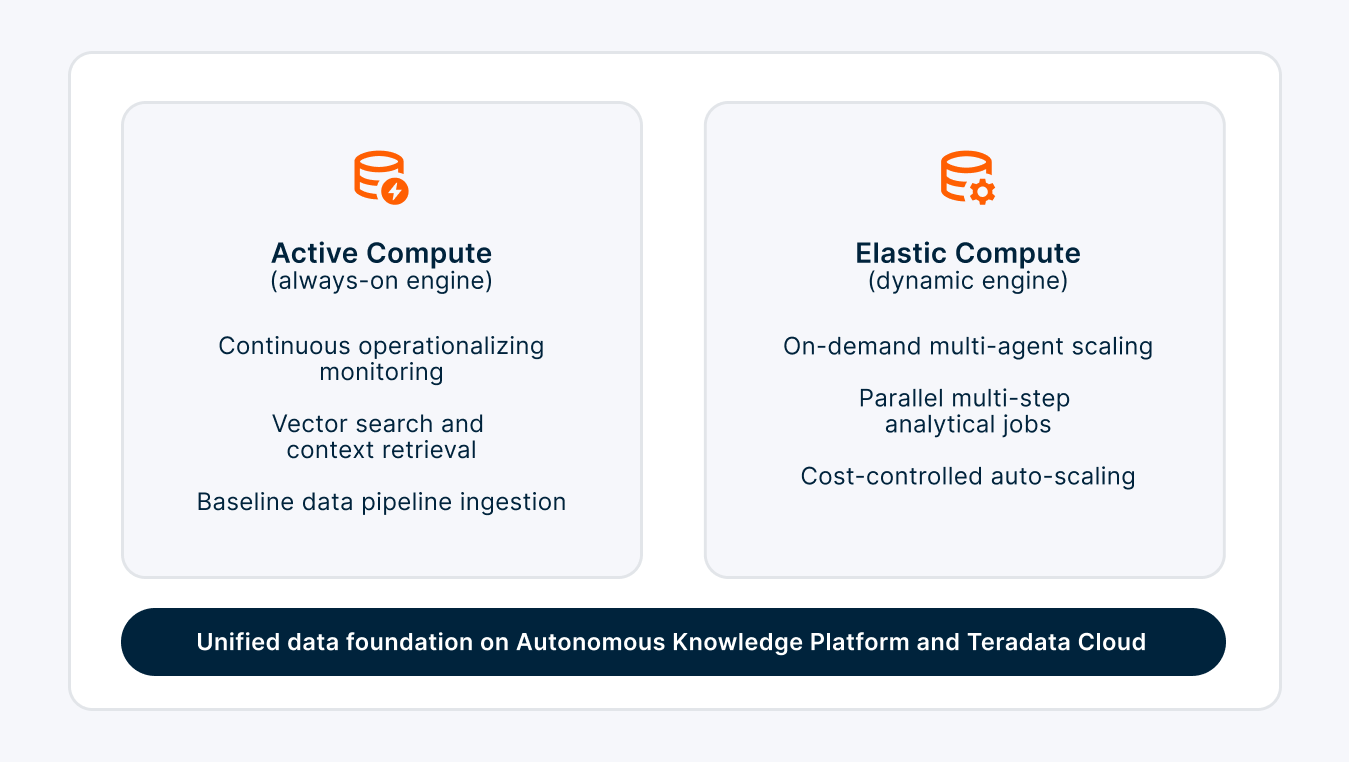
Teradata Cloud bildet die Grundlage für die unternehmensbasierte Bereitstellung durch Dual-Engine-Rechenverarbeitung:
- Aktives Rechnen: Liefert immer-eingeschaltete, hochzeitige Leistung für die Basisdatenerfassung, kontinuierliche Überwachung und Echtzeit-Vektorsuchoperationen.
- Elastisches Rechnen: Bietet analytisches Rechnen auf Abruf, wenn Agenten komplexe mehrstufige Denkaufgaben oder parallele Datenoperationen initiieren, um vorhersehbares Kostenmanagement zu unterstützen.
Entwickler nutzen Teradata AI Studio, um Multi-Agenten-Workflows zu modellieren, zu testen und zu überwachen, zusammen mit Teradata Fabric, das einen Zero-Copy-Datenzugriff in Cloud-Umgebungen ermöglicht. Durch die Integration von Kontextmanagement, flexibler Rechenleistung und Enterprise Governance hilft Teradata Organisationen, KI-Agenteninitiativen von experimentellen Studien in den Produktionsmaßstab zu verlagern.
Fazit
Die Enterprise-KI-Landschaft bewegt sich rasant von passiven Assistenten-Schnittstellen hin zu operativen agentischen Systemen. Organisationen, die auf isolierte Punktlösungen oder ungeerdete Sprachmodelle setzen, werden weiterhin mit Pilot-Stalls und fragmentierter Datenverwaltung zu kämpfen haben. Die Skalierung autonomer KI-Agenten erfordert eine robuste architektonische Grundlage – eine, die Datenpipelines, semantischen Kontext, kontinuierliche Governance und flexible Rechenleistung vereint. Durch die Einführung einer strukturierten fünfschichtigen Architektur können technische Führungskräfte die Lücke zwischen Pilot und Produktion überbrücken, operative Risiken mindern und nachhaltigen Unternehmenswert aus autonomer KI freisetzen.
Beschleunige deine Agentic-KI-Implementierung
Bereit, Ihre Enterprise-KI-Agenten vom Pilot- in die Produktion zu bringen? Entdecken Sie, wie die Teradata Autonomous Knowledge Platform Ihre Daten vereinheitlichen, Ihre Agenten in Echtzeitkontext verankern und Unternehmensabläufe sicher skalieren kann. Fordern Sie eine individuelle Demonstration an oder starten Sie eine praktische Bewertung mit einer Teradata-Studie.